
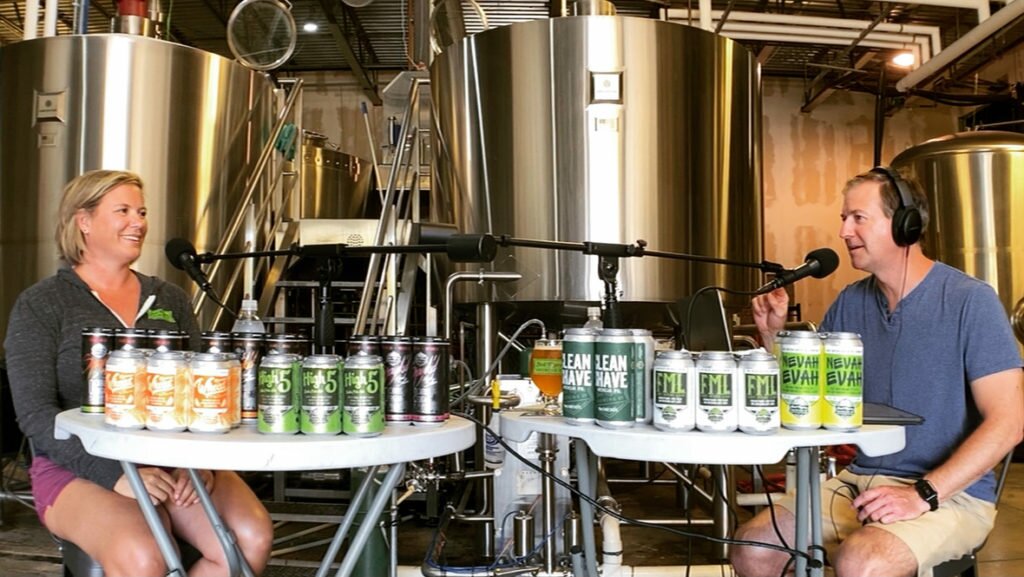
Rob had been a home brewer in San Diego, California as far back in the 1990s. “When he brewed in college, he brewed really bad but really strong beer,” said Jen. After they were married and Jen was working a lot in Michigan, Rob took up homebrewing again. He then met the owner of the first brewery in the town they were living in near San Diego. He ended up volunteering there and learned the ropes of brewing as a business as opposed to simply being a home brewer. But given the expense, he was never able to open up his own brewery.
After moving to Fort Myers in 2011, they noticed an industrial area in their Gateway community, not far from the Southwest Florida International Airport. Rob saw the area as ideal to open up a craft brewery. By the time they opened in March 2013, there were only 45 craft breweries in Florida. Today, there are over 375. Fort Myers Brewing Company is still in the same industrial park, but has expanded many times and their biggest expansion plan is currently underway and should culminate by early 2022.
But in the beginning, they were very small and it operated as a side business. “Our plan was to brew on Sundays and our tap room would be open on Friday and Saturday, and we’d keep our day jobs and maybe we’d meet some friends in our new home town, and it quickly exploded,” said Jen.
Over the years, the Fort Myers Brewing Company has continued to knock walls down and expand their brewery and tap room. Food trucks park outside daily so that food is available for patrons.
In 2016, the Fort Myers Brewing Company won the Best Large Brewery in the State of Florida by the Best Florida Beer Awards. “I still don’t consider ourselves large,” said Jen. “We are relatively small, in the grand scheme of things, but in Florida we are one of the larger breweries.”
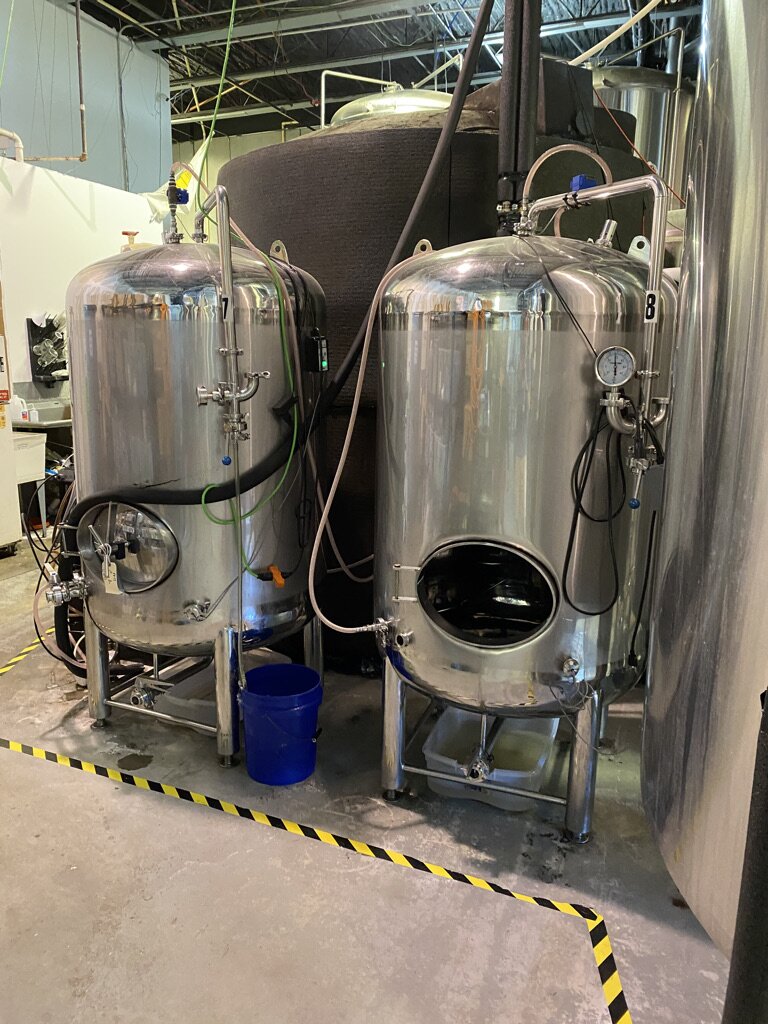
Beer from the Fort Myers Brewing Company is only available in Southwest Florida (with a few exceptions in the Tampa market). However, you can find it at most bars and restaurants in the broader Fort Myers area, with some beers only found exclusively in their tap room.
“We’ve made the conscious effort to go deep in our backyard,” said Jen. “We still can’t keep up completely with our backyard so we are very content with producing beer for Southwest Florida and telling people if they want to have Fort Myers Brewing beer they have to come to this great area of Florida.”
When they opened in 2013, “we had the capacity to brew about 350 barrels a year,” said Jen. “We now have the capacity to do 15,000 barrels a year.”
There are also some seasonality challenges to the production process considering that Southwest Florida is a very seasonal area. “That was a big lesson to learn and the quicker someone learns that in a seasonal area is really important.”
Like many craft breweries, they have also had to deal with peculiar regulations. For many years, the 64 ounce growler, which has traditionally been the most popular size growler among craft beer consumers, was illegal in Florida. “The wholesale lobby fought against changing that for a couple of years,” said Jen. But in July 2015, the law changed and 64 ounce growlers were permitted to be sold and filled. “Patrons just didn’t understand and thought we were making things up,” said Jen.
While Fort Myers Brewing Company isn’t a threat to the big, macro beer companies, together the craft brewing industry does take up some market share, so anything the big beer lobby can do to reduce competition, they naturally do. However, as Jen attested, “I think that that’s shifting and I’m happy about that.”
The law in over 35 states – including Florida – also requires breweries to use a distributor to get your beer to bars, restaurants, and convenient stores. There are some states, however, that have shifted to allow breweries of certain sizes to distribute their own beer to a number of accounts.
“Early on, that’s a challenge. Distributors only have so much bandwidth. They want to see a brand that has already grown and taken off. And so to allow a new and emerging brewery to go build a route and get their first 50 to 100 accounts could be really useful to new breweries,” said Jen. “Once you’re at where we’re at now, I can’t imagine trying to do that myself. The distributors do it so well. They’ve got that business built – so to rely on them and to partner with them is a necessity in my opinion.” However, the other unique thing to the craft beer industry is the franchise law. “In Florida, our contract with our distributor is lifetime,” said Jen.
Running a business has it’s common challenges, but COVID 19 gave just about every business owner everywhere an unexpected series of challenges.
When COVID19 hit in early March 2020, Jen and Rob decided to keep all of their staff. “We already run lean anyway,” she said. At that time, she realized that “when things do open back up, we can’t afford to train people in the back again. But we’re also spending an incredible amount of money for payroll not knowing when we’re going to open back up.”
In these unprecedented times, Jen came to understand there was no right way or wrong way to do this. “In other respects, it was comforting to know we are all in the same place. We’re all just trying to do what we believe is best for our business and hoping that we’re making the best decision possible.”
In 2016, Jen and Rob had started working on an expansion plan for the brewery that included a plan to acquire land owned by the government, near the Southwest Florida International Airport from where the Fort Myers Brewing Company has been since they opened in 2013.
“We started seeing signs pop up for land around where we are at and it was land that the Port Authority owned and it was for lease,” said Jen. They started reaching out and didn’t get a lot of information out of the gate. But about a year later, someone reached out to them and told them that there is a 20-acre parcel that is adjacent to their current facility.
While the land was available for lease, Rob told his wife that they would be spending an incredible amount of money on a facility on land that they didn’t own. “We got a little nervous about that.”
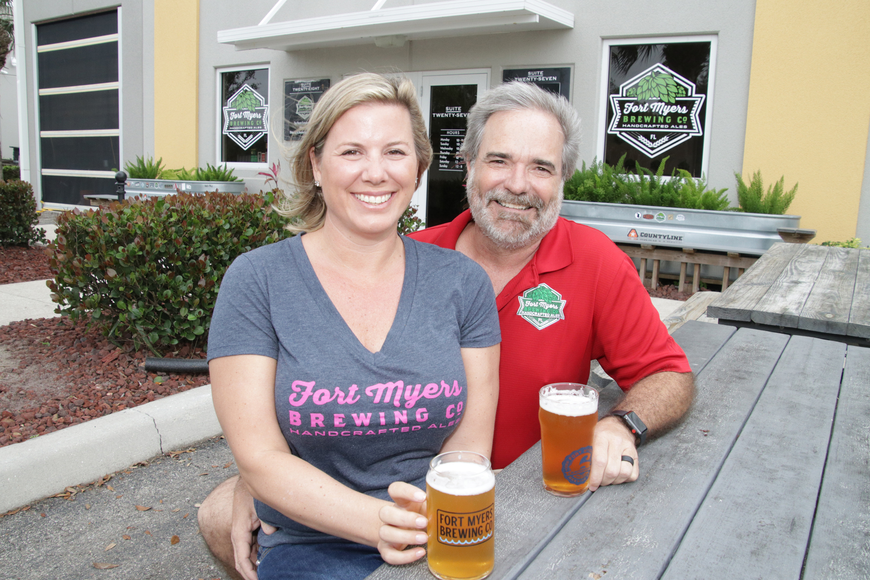
We were told for years that they would never sell this land. Then they sat down with county officials and one of them told them, “Why don’t we just sell it?”
But the county couldn’t just “sell it” because of the fact that the land would have to go up for public bid. Then, there are all kinds of hoops to jump through – it’s not only county-owned but because it’s through the Port Authority, the FAA has to sign off on the sale, getting the federal government involved.
“We probably picked the hardest parcel possible to purchase,” said Jen. “The land touches the parking lot of where we’re at. That’s why it was important to us. We built a really nice following. We love being in the Gateway area. Gateway has really embraced Fort Myers Brewing.”
The land went up for public bid in December 2019 and Fort Myers Brewing Company won that public bid. On Thursday, March 12, 2020, the county commissioners voted to approve the sale of the land. The timing was interesting to say the least.
“It was that afternoon that the stadiums (for spring break baseball) shut down and four or five days after that, our taprooms moved to to-go only. And so there was a moment I thought – more than a moment – there were maybe a couple months that we weren’t sure if the expansion would happen,” said Jen.
“But I’m happy to report that it is happening. We have been working very rapidly on those plans. We are in the middle of all the orders and permits we have to get,” said Jen. They even got approved by the Army Corps of Engineers and are currently working through zoning and development orders. She quipped that she has been “earning a lot about land development” through this process.
Fort Myers Brewing Company expects to break ground in late 2021 or early 2022. “Because we’re so seasonal, the timing is really important and has to be very strategic.” They will have to move equipment and take equipment offline – and there’s only a few months during the year where it would make sense to do that.
The bar and brewery business in what some have dubbed “The Free State of Florida” were closed just shy of six months during the COVID19 shutdowns. After first being allowed to reopen at the end of May, they were shut down again at the end of June through the end of September.
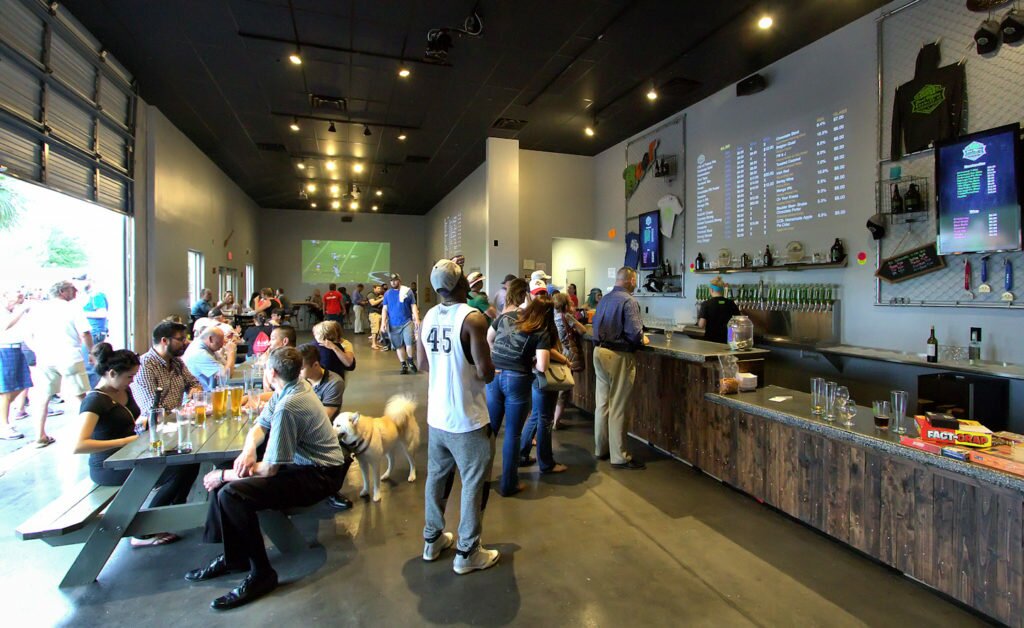
If you were not serving food, you could not reopen. The food license had to be in your own name, so just having food trucks owned by others sitting outside did not put them in compliance. “So we bought a food truck,” said Jen. “It’s still parked in our parking lot. We bought it so we could have the license in our name.” But they continued letting the other food trucks who served their customers park there and serve their food because the owners of those food trucks still need to be supported too.
The biggest thing she has learned, she learned through COVID, and it’s this: “That we can overcome anything – and I don’t say that lightly because not everyone has come to the other side of 2020 with that same experience,” she said. “But for me, it’s given me a ton of confidence.” She describes herself as “a worrier … and the last year has freed me of that.”
Like many businesses that were forced to shut down, the Fort Myers Brewing Company was able to survive, in part, through federal assistance programs, but also were helped by programs at the county level in Lee County, Florida. There are other issues affecting small businesses, including supply chain issues — as one example, there’s a can shortage that is likely to persist through about 2025.
“Because of our expansion plans, we had been saving for a long time. And so we dipped into some of those expansion funds. But it did give me some comfort that we had a larger cash reserve than we normally would have had because we were planning for an expansion. As a business owner, I will keep more cash on hand because there’s no telling when this could happen again. That’s probably my biggest fear coming out of 2020. We have seen that the government can suspend business licenses. They can change the course of your business without any warning … how will you mitigate that if it were to happen again?”
It has been quite the journey for Rob and Jen Gratz. When Fort Myers Brewing Company first opened, they had four of their own beers on tap. “We’ve now cycled through 200 plus different recipes of beer,” said Jen. “At any given time we have 20 to 25 beers on tap. We have seven different flavors of seltzer.”
“We started developing seltzer a couple years ago,” she said. It’s called “Spiked,” and it’s a hard seltzer. It’s 5% alcohol. No carbs. No sugar. No artificial sweeteners. “There’s a lot of people trying to be healthy. It’s crystal clear and extremely refreshing and brewed like a beer.”
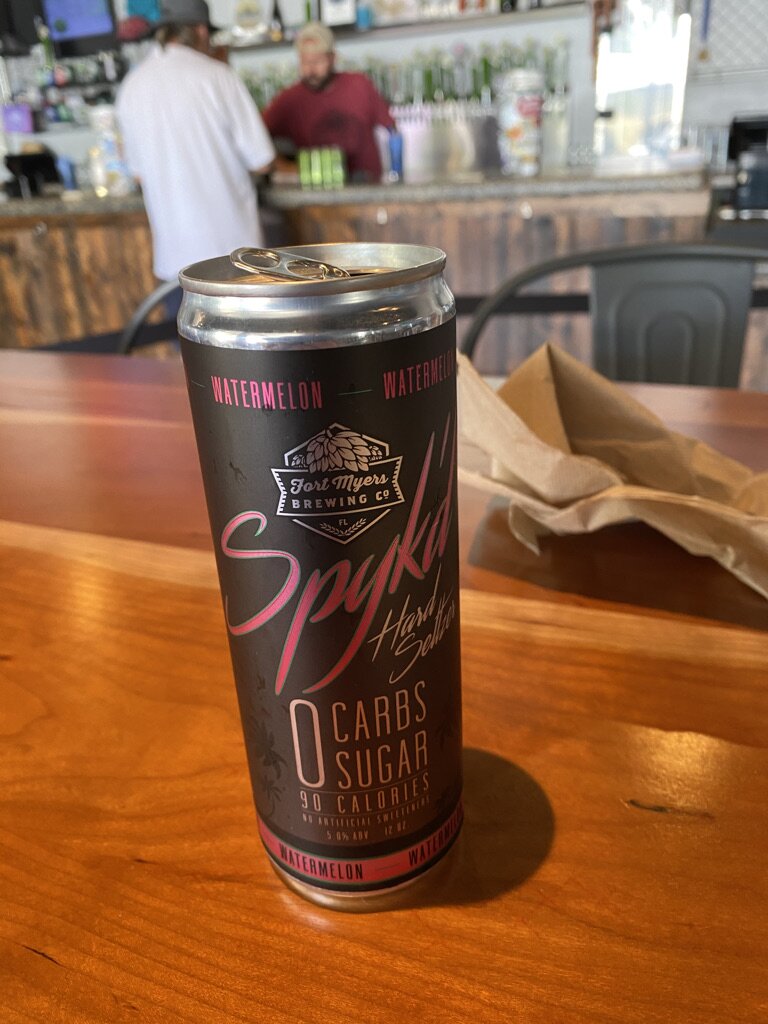
Like most successful entrepreneurs, Fort Myers Brewing Company tests their products before going big. For a craft brewer, that means testing the beer in the tap room and getting customer feedback. The last 5% of product development took them a year and a half. The first package and product was released in March 2020. It’s available in grocery stores, locally, like Publix. It did really well, at a time when people were swarming grocery stores in the early days of COVID. “It helped us weather all things COVID,” said Jen.
“There’s a lot of talk of supporting small business right now,” she said. “I do have to give a shout out to the big businesses in the area. We got calls from some of the biggest businesses in the area, saying send us everything you’ve got. We will put anything you have on our shelves. To their credit, they needed small businesses to survive as well.”
“We’ve done collaboration beers with other breweries to help promote others in our industry,” said Jen. “Through COVID, we put together a program – it was called a Crowler Crawl. Buy two crowlers here, two crowlers at another local brewery, and two crowlers at a third local brewery and you get a special commemorative t-shirt. There’s a lot of collaboration in our industry. Once you’ve had a good solid craft beer, you’re probably going to drink another one.”
She also gave us advice for aspiring entrepreneurs in the craft brewing industry. “My philosophy is you get to market as quickly as possible, as inexpensively as possible, you test your product, and then you build from there,” said Jen.
“I think there’s still room for quality craft beer,” said Jen. “I think the first place to start is with the product. I would advise starting really lean and getting to market quickly. If you haven’t brewed on your own, you’re going to have to hire a brewer, which makes it a little bit more expensive to open.” While Fort Myers Brewing Company opened with about $50,000 initial investment in 2013, she says most consultants would advise people to start with seven figures today.
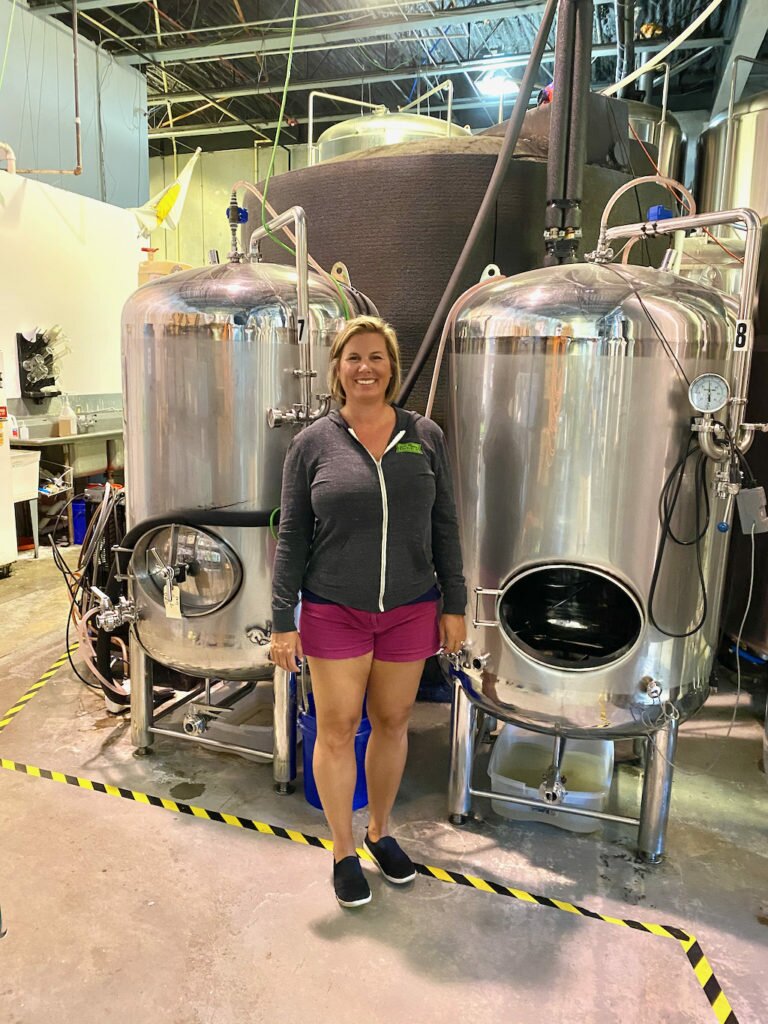
“You’ve got to get feedback from people who aren’t your friends,” she said. “What your friends will say to you versus what the paying consumer is going to say to you might be two very different things.”
She also advises to open with a solid tap room plan. Then, continue to test your product before you go wide out in the market. “The further you get your product away from your home base, the harder it is to control … how it’s cared for, how it’s served.”
Fort Myers Brewing Company is a good model to emulate as they are flourishing and have been recognized widely for their quality products. They have won multiple medals at the Florida Beer Awards. Their chocolate stout was named the second best chocolate beer in the world at the World Beer Cup in 2018 (the last time they held the competition). At a national competition in Tampa just six months ago, they were named the best seltzer.
Jen’s first job as a youth was having a paper route in her small town in Michigan. One of the biggest things she learned from that was how each customer wanted their paper delivered. “If you did it right, you got great tips during the holidays.” In addition, “it was the start of developing a work ethic.” Her work ethics and her attention to customer feedback has been a great quality she has brought to the business she run with her husband Rob. Their journey continues, as does their expansion. To find out more about their beers and how you can visit them in Fort Myers, visit fmbrew.com.
You can listen to the full interview with Jen Gratz on Episode 94 of the Agents of Innovation podcast on Apple podcasts, Audible, Spotify, Stitcher, SoundCloud, or wherever you listen to podcasts (and please don’t forget to write a review on any of those platforms!) You can also follow the podcast on Facebook, Instagram, or Twitter.
For those looking to directly connect with and learn from the many guests of the Agents of Innovation podcast, please consider joining the Fearless Journeys community today!
Ryan also founded the Delray Newspaper, Boca Newspaper, Joust Umbrellas and The KTCHN – a eight desk co-working space housed in his office on Atlantic Avenue in Delray Beach. Today, he is also a city commissioner of Delray Beach. Ryan was also a founding board member of Palm Beach Tech (now rebranded as Tech Hub South Florida).
“Palm Beach as a county has such a great brand when it comes to tourism and vacation. But no one was really talking about the innovation and the tech that’s happening here and how it’s a great space to start a business,” said Boylston. “We are outside that mecca that is Miami and I think we provide a unique work-life experience for small-type start-ups.”
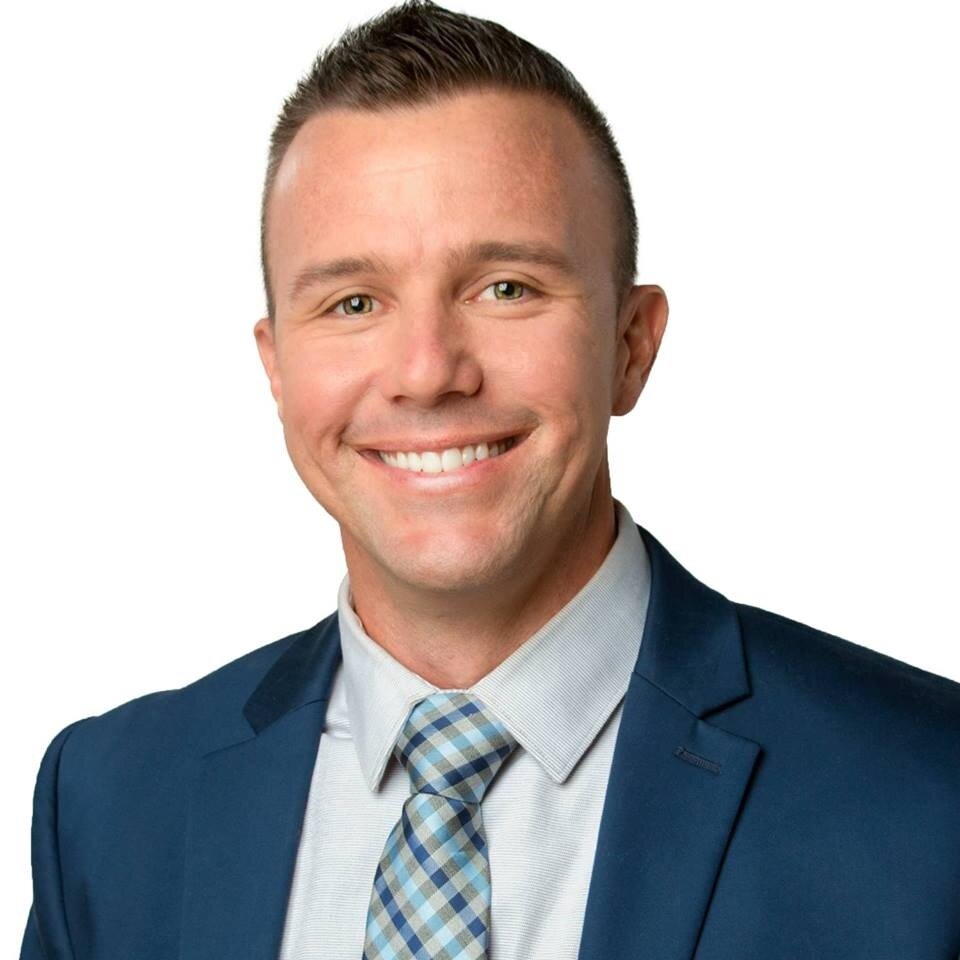
“The old model was Big Tech spins off little tech. You had that tech hub and the bigger names – there was AOL, Google or Facebook – and they spin off all this other tech. But as every industry became tech-based, then that started to break down those walls. Then, rather than starting a tech company that delivers food in a place that there’s more tech companies, you’re seeing that tech company open where there’s an incredible amount of restaurants.” One of the businesses like this that started in Delray Beach is Delivery Dudes. While they are in the food delivery business, the core of what they are is a tech company.
As a youth, Ryan walked into Wal-Mart when he was 15 years old to apply for a job. They only hired people starting at age 16, but he wanted to get a jump on the application process so that he could be interviewed as soon as he turned 16.
“As a young individual in high school they put a lot of trust in me to learn everything you could do at Wal-Mart,” he said.
Upon graduating high school in South Florida, he then went to the University of Central Florida, primarily because it was the hotspot for video production in the late 1990s. After he started his studies there, he decided to shift to marketing and mass communications. During college, he applied for many internships, including at Hughes Supply and at Anheuser-Busch Parks. Those experiences helped him land an internship with the JM Family Enterprises in Deerfield Beach.
Ryan’s mother had worked at the company for many years and so he grew up knowing their founder, Jim Moran, who he really admired because he made every member of the team feel like family. To this day, Ryan doesn’t refer to any of his own employees as “employees” or “staff.” They are valued members of the team. He added that in his role on the city commission, he has found that “in government, the word ‘staff’ is thrown around a lot. That’s a really tough word to remove from your culture at city hall – the word ‘staff’ – and replace it with associate or team member.”
In his own career, he began climbing the corporate ladder at JM Enterprises, and later again in roles at Toyota and Auto Nation. However, the day after he turned down a promotion at Auto Nation, he was let go and walked out of the building.
“Although I was passionate about the auto industry, I wasn’t really passionate about the dealership side,” said Boylston. “Most of my time in the auto industry was at the dealership level and it was something I wasn’t passionate about.” His passion was more in the marketing arena, but there were no opportunities to climb the corporate ladder in those areas.
At the time that he was let go, Ryan and his wife, who was a teacher, had recently purchased their first home and they had a one-year-old child. “You immediately start thinking: ‘we got to pay the bills,’ that what you got to do,” said Boylston.
Fortunately, he had already started doing some consulting work on the side while still with Auto Nation. Some of those clients had wanted more of his time anyway. He realized he could start using the same skills – of identifying disconnects in auto dealerships – and applying that to other smaller and medium size businesses.
“On the drive home, I immediately started calling my clients and told them: ‘hey you wanted more of my time, you got it.’”
“And then the next day, I got up like any other normal day and instead of getting on the Tri-Rail to Fort Lauderdale to go work at Auto Nation, I got up and went to a coffee shop or went to a library and rented out a little room and just grinded it out and tried to start my consulting firm.”
Every day, he would reserve room 203 – a quiet room – at the Delray Beach public library, by the hour. As long as it was still free, he could continue working there.
“Once in a while I would come out and someone would be waiting for the room,” said Boylston. “So then I’d be out of the room for an hour and then I’d go back in. That was my first office.”

This was 10-years ago. “Co-working wasn’t even a term, let alone available to me,” said Boylston. “When I eventually got to a point where we had a big enough office, where we had additional space, at that point co-working was a term but it wasn’t something that had made it to Delray Beach yet. So, we decided to take a portion of our office … we put 8 desks in and we opened it up to any business.” That’s what became the KTCHN.
For those considering leaving the corporate ladder, like he did, he says, “Don’t be afraid to make the sacrifice. That was something I was somewhat afraid to do in leaving my job but obviously not too afraid to decline a promotion and to stay in a position that allowed me to have this side consulting firm that I was slowly growing until I could leave. Be willing to make that sacrifice … because it’s most likely going to be short term. And, in the long term it will probably be the best decision you ever make.”
Ryan’s first sacrifice didn’t work out. He sold his car and invested the funds into a start-up. But, he said, “I learned a ton and the next time I had an opportunity to sacrifice and start my own thing, I really had a lot of lessons that I had learned to put towards the success of the second venture.”
In this new venture he worked 80 hours a week. He would work 8 to 10 hours a day, come home and have dinner with his wife and son, and then put in another five hours of work at night. He did that for over a year. He then hired his first employee. They worked 40 hours a week, allowing him to drop his hours down to about 70 hours a week. “But then you hire another person and maybe you get to 60 (hours) and then 50, and it never goes lower than that, at least I don’t think it does,” said Boylston.
The company was first started as Futuristic Woo and then later went through a rebranding with a new name, 2TON. Their headquarters today is in the Warehouse District of West Palm Beach.
“Over the years, we just continued to bring additional services in house,” said Boylston. “Today we are a full-service creative agency. We handle our clients’ brands and every extension of their brand. We don’t just make pretty things, we put strategy together with those pretty things so we have just as many, if not more, strategists and consultants and then we have designers and developers.”

“It’s one of the core principles of 2TON: we do not use contractors, we do not outsource, period. Everyone is a full-time associate of 2TON. We don’t even have a team member that is paid hourly. Everyone is a salaried, full-benefit associate at 2TON.”
“In addition, there are two positions that we don’t really believe in at 2TON: one of them is the sales rep position. If you reach out to 2TON and want to talk to us about services, you are going to be on the phone with me,” said Boylston. “And if you’re not on the phone with me, you’re going to be on the phone with our creative director or our COO. That’s really important that our relationships start at that level. And secondly, we don’t believe in account reps, or the key holders. We want, and our clients want, to actually talk to the people who are designing and developing and writing or strategizing for their company.”
In addition to his role as a CEO and entrepreneur, Ryan is deeply involved in his community through private philanthropy and public service.
“One of the things I learned when I moved to Delray Beach and started to raise a family there is people give back. There’s a lot of boards – from art boards to Pineapple Grove boards to planning and zoning boards. People donate their time to sit on these boards to make sure the city heads in the right direction that everybody wants. So, I figure if I’m going to live here then I’m going to sit on a board.”
He started serving on boards that he could just raise his hand to be on the board. Then, he moved on to boards he had to be appointed to by a city commissioner. Then, he moved onto a board – the city commission – that he had to be elected to.
“Over about almost a 10-year period, after jumping from board to board and asking to sit on different steering committees, and bringing I think a unique perspective to a lot of these boards, as an entrepreneur, as a young family, father, husband, I decided to run for city commissioner – that was three years ago.” He finished his first term in March 2021 and was re-elected handedly then.
“Local politics impacts the life around us, the businesses around us, way more than the politics many levels above us,” said Boylston. “If you can bring a view point that is present – it’s now, I’m in the business community now and I’m the father of two children who are in our public school system now – because a lot of time people run for these positions once they retire, once they have the time to do it, which is great and they come with a lot of experience. However, they might not actually be living that aspect of your city at that time, where I very much am.”
This is another reason Ryan became involved with helping to start local newspapers in Boca Raton and Delray Beach around 2011. He discovered how empowering it was to have local reporting that isn’t affected by viewers or clicks. He owned these papers for about five or six years and eventually sold his shares in it.
“It’s definitely not a business that you get into to make a lot of money but it is one that is very rewarding and I learned a lot,” said Boylston. “Our goal was to basically break even every month.”
All the owners, editors, and sales people had other jobs on top of running these weekly local newspapers. “It’s challenging and you can see why there is that disconnect with our local news and national news. They are chasing clicks, they are chasing viewers, they are trying to stay alive financially and unfortunately it skews the news.”
One area Ryan is passionate about bringing more awareness to is the field of entrepreneurship. “This next generation – they need more of these types of stories,” said Boylston. “The Millennial generation has shown an interest in owning a business more so than any generation before. They are failing more so than any generation before.”
Boylston went on to talk about one of the great things that entrepreneurs can do is to live their passion, create jobs in their community, and support their family. They don’t have to be Mark Zuckerberg or Elon Musk.
“Well, what if you were able to start a small business locally? And yea, you might never have a garage full of cars, but you’ll always drive the car that you want. And you’ll live in a house, and support your family, and your kids will go to college, and during that entire time you were able to create that life by doing something you love and employing people in your community. Would that be enough?”
“That’s what we should be aspiring to, at least most of us: is to create a life that we love and a job that we love and a career that we love,” said Boylston.
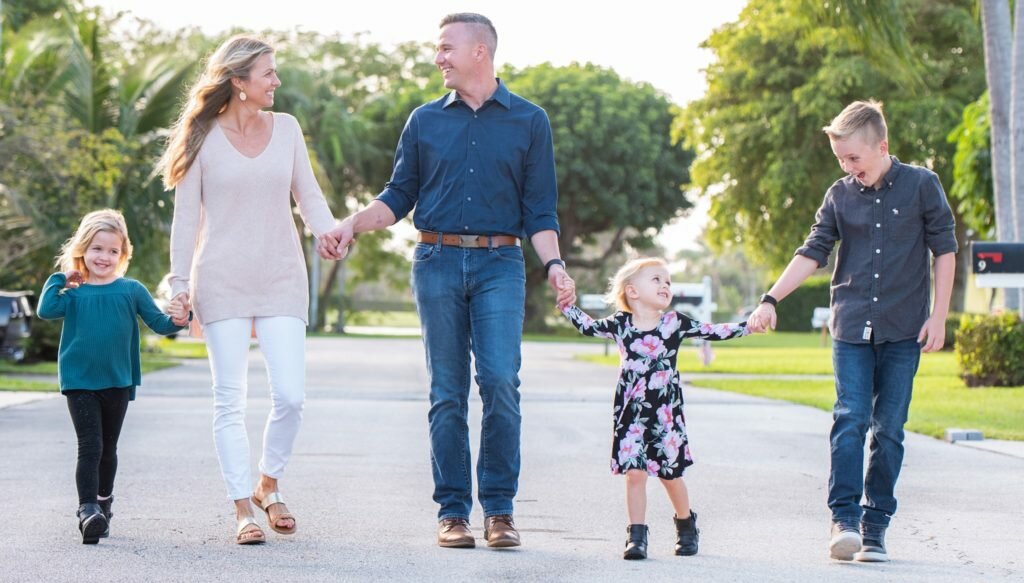
His advice to young people who want to be entrepreneurs: surround yourself with people who you want to be like, ask questions, and ask people like him to have a cup of coffee with you – and learn from them through those conversations and interactions. “Also, don’t be afraid to venture into the world of working for a great company,” he said. “You don’t need to own a company. It’s really tough, not only to own it, but to build it, and the responsibilities that come with that.”
But when you do want to start a company, Boylston suggests: “Look for where opportunity in the market intersects with your passion and you’ll be successful. And, work your butt off!”
You can listen to the full interview with Ryan Boylston on Episode 93 of the Agents of Innovation podcast on Apple podcasts, Amazon podcasts, Spotify, Stitcher, and SoundCloud. You can also follow the podcast on Facebook, Instagram, or Twitter.
Please consider supporting the Agents of Innovation community by becoming a member of our Patreon page today, starting at just $5 a month!
]]>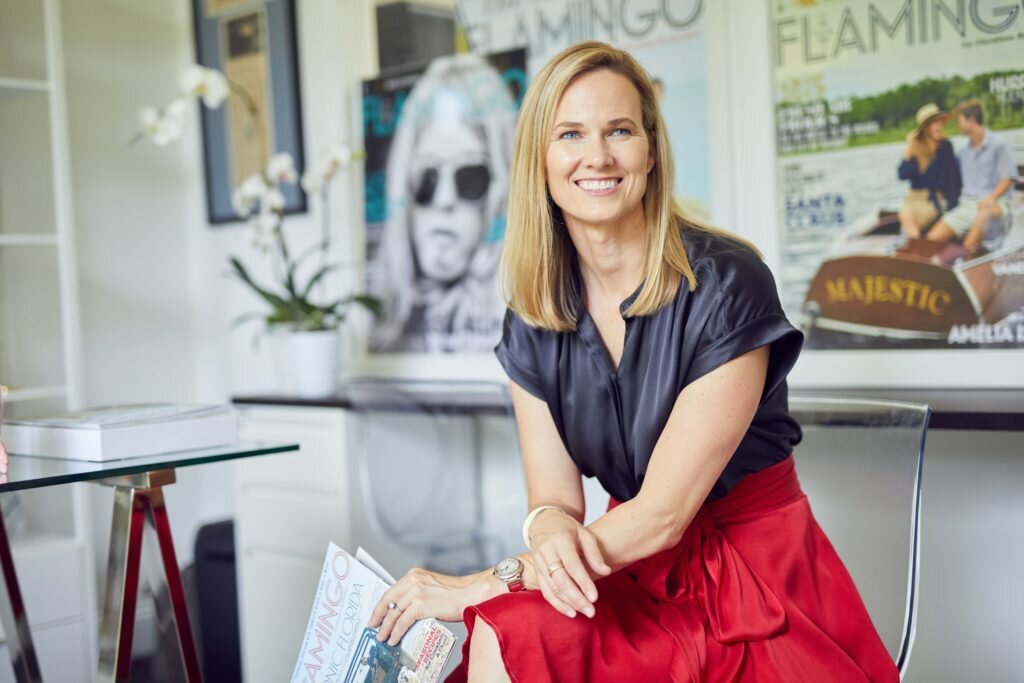
As an editor and journalist, Jamie has covered travel and culture around the world. Her work has appeared in national and international publications. She spent much of her professional life abroad and worked in newsrooms from The Moscow Times to The Times of London. She holds degrees from Florida State and Georgetown.
Like many Floridians, Jamie is a transplant. When she was 16 years old, her parents moved from Raleigh, North Carolina to Parkland, Florida. She went kicking and screaming at the time, she said. But today she reflects on how it forced her out of a place of familiarity.
“That move and forcing me to have to survive in a new place and such a diverse place probably changed my path forever,” she said. “I was forced out of my very comfortable zone in NC … where I knew everything and never was challenged – and to be forced out of that I do think that sort of set me on a path of continual learning and adventure.”
And what an adventure it has been. She went to college at Florida State University. During that time, she interned at the Florida State University public affairs office and wrote stories on behalf of the university that were published in the Tallahassee Democrat. After she graduated, she moved to Atlanta only to discover that there were not as many jobs in journalism and most were very low pay. So she took her communications skills to the Southern Company, a large energy company, and did public relations for the corporate communications group there.
During her first post-college professional experience at Mirant, a subsidiary of the Southern Company, perhaps the most important thing was that she found an important mentor, her boss, Sandra Mackey. “Most people don’t land such a great boss in their first job,” recalled Rich. She also had the unique experience of helping to get representatives from Mirant to ring the bell on the floor of the New York Stock Exchange on the first day their stock went public. On the flip side, Mirant was also a competitor of Enron, which became embroiled in financial scandal, and she learned the skills of managing her company through a communications crisis. On top of all this, she also met her husband at work. His career opportunities, including working in emerging markets, led the couple on an international adventure.
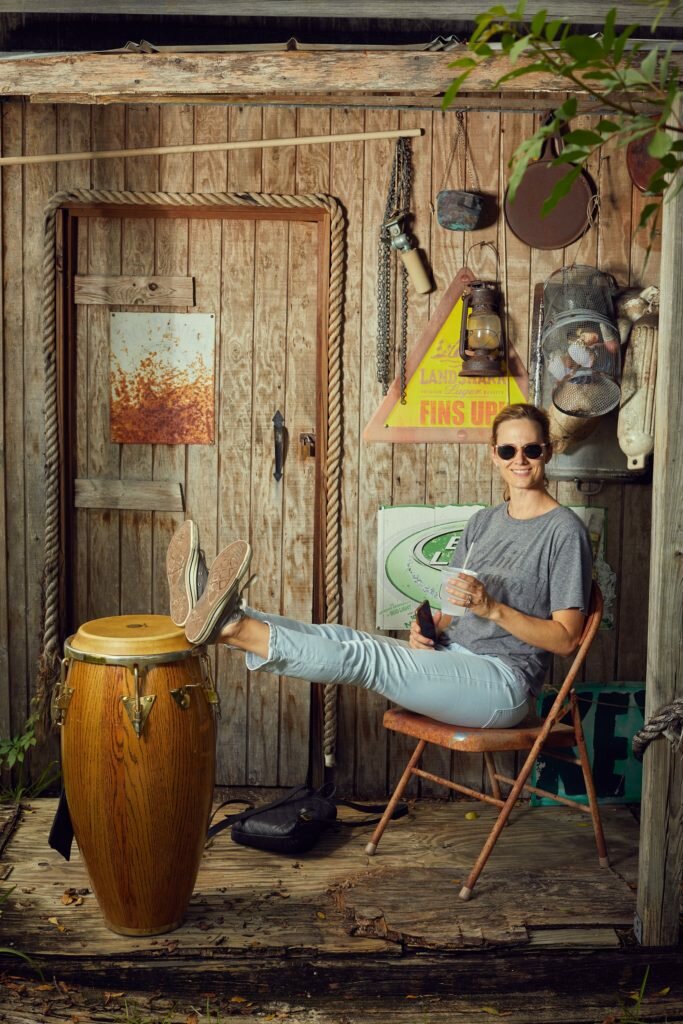
In 2002, Jamie and her husband moved to Moscow. She said this move, “Gave me the chance to reflect on what I wanted to do next … that was really a chance for me to take a look at what I wanted to do professionally so that’s when I made the move to journalism.”
She obtained a job on the copy desk for The Moscow Times, the only English-only daily newspaper in Moscow, which was read by almost all English-speaking ex-pats. She also wrote for the paper during “an interesting time to be in Moscow.” On top of this job opportunity, she said the experience of living and working abroad was the “beginning of a lifelong journey of learning about other cultures, appreciating other cultures.”
After two years in Moscow, Jamie and her husband moved back to the Washington, DC area. She was pregnant at the time and decided to become a freelance writer and reporter. She was in a very competitive market and soon realized, “I needed more skills in my toolbox to be successful and I realized that pretty quickly.” So, she enrolled in a Master’s degree program at Georgetown University.
She said she thought at the time: “I really want to increase my skills, my education, I want to better myself, it’s just such a different approach and mindset.” What she got at Georgetown was the rigor and constructive feedback she needed. She also had unique experiences, including having classes on-site at the Washington Post, including one taught by legendary journalist Bob Woodward. Later, when she would start Flamingo Magazine, she would lean on some of her Georgetown professors and other connections she made during that time to help her build out a larger media business that went beyond writing and editing.
While she was at Georgetown, her husband’s work led him to begin traveling to Cameroon, an underdeveloped country in central Africa. After Jamie earned her M.A. degree and her daughter was old enough to be vaccinated to meet the requirements needed to travel to Cameroon, the family moved there. During their time in Cameroon, the toddler contracted malaria twice, giving the family a whole new perspective on how challenging it is to live in Central Africa. Jamie also reported on some unique stories, including the mutilation of breasts that many young women faced and how it was as socially acceptable part of the culture there – with the goal of protecting the women. However, it wasn’t based on science.
From there, Jamie and her family moved to London for three years. During that time she worked at the Times of London, where she worked the digital desk, at night, while she pregnant with her second child. She and her husband worked such grueling hours, she would often find herself exchanging the parenting duties with her husband by meeting him on the platform of the Tube to drop off her first daughter.
“I loved it. There couldn’t have been a more energizing place to work and city to work in at that time,” said Rich. She said that living overseas “has been so critical to who I’ve become.”
“Travel is so important for that reason – just giving people perspective and helping them feel connections to other cultures is so important to appreciating diversity and appreciating people’s differences,” she said. “Traveling helps you gain an open mind.” She just loved “feeling that buzz of being in a place totally out of your element and learning.”
“I feel like I get a lot of that buzz and being out of my element through” running a magazine now, she said.
Jamie moved back to Florida around 2012, when her husband was offered a great position in Jacksonville. And with two children now, Jamie still had a passion for journalism. As she began talking to more locals, especially transplants to Florida, she began hearing a consistent theme from people that different parts of Florida were like “Georgia” or “Alabama” or “Latin America,” etc. She thought: “No, this is all Florida.”
“We are all Floridians and we really need to find a way to unify under that instead of separating ourselves so much and identifying with another place and not identifying with our state,” she said.
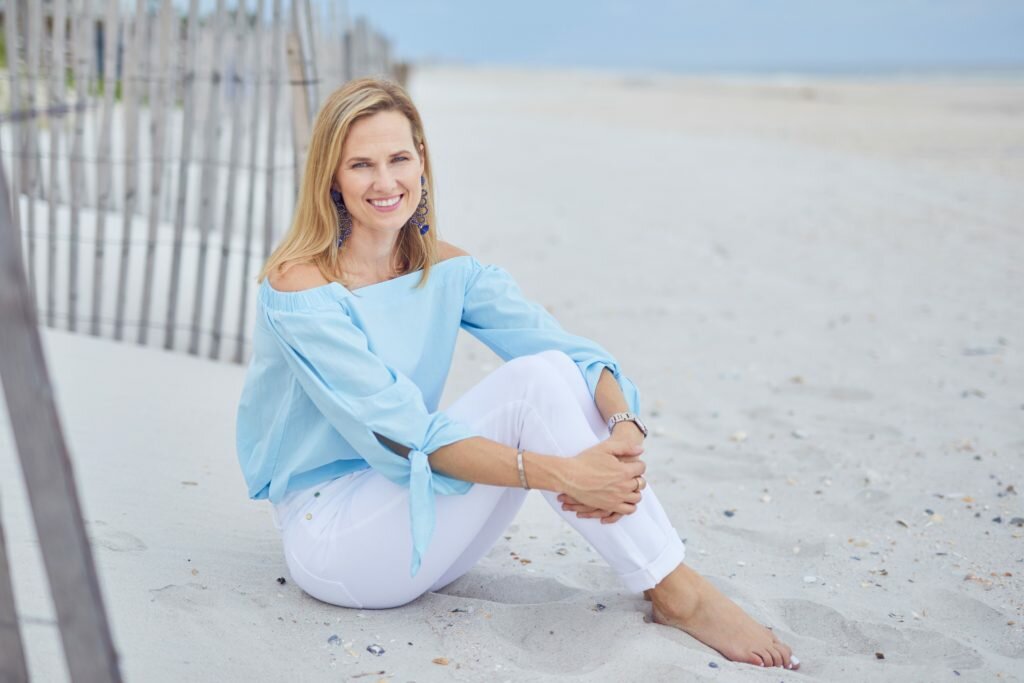
She saw an opportunity for a statewide magazine that would bring this all together and help Floridians connect with the diverse people, places, and culture across what has become the third most populous state in the union.
“So that was another real driver in just finding the mission of the magazine which is to unify the state and to be the destination for its greatest stories and then to inspire our readers to go out and do new things and experience new parts of the state that they discovered through our pages.”
She then spent a full year developing the plan. She put on her “reporter hat” and began investigating the ways to start her own business enterprise. While she was trained as a writer and reporter, starting a business required finding revenue sources such as advertisers and subscribers; in this industry, it required learning about printing, publishing, and even which types of paper to use.
She was fortunate to have her husband as a “sounding board” and to review her business plan. Jamie said it “is so important for people starting a business to have someone you trust who can really poke holes in your plan and push you to really know why you want to do something and if you really do want to do something if you should do something.” Her husband was that “the contrarian voice” that made her look closer at her plan.
She also involved others in the process. She had conversations in coffee shops with writers and other business leaders and engaged in brainstorming sessions. There was a lot of enthusiasm from many people at that point. “I love the creative process,” she said. “That part is so fun.”
However, keeping people involved through the next, actionable steps of actually starting and growing the business was more challenging.
“Then when you really want someone to help you do it and put the work in, and roll up the sleeves and stay up all night, and do what it takes to produce, anything really, a new business, a first edition of a magazine, that’s a special group of people.”
On Episode 92 of the Agents of Innovation podcast, Jamie demonstrated what other entrepreneurs can learn from her story. She understood her skill set and its limitations, collaborated with others, sought and obtained feedback, put together a team of people of specialized skill sets (especially skills she did not have), built on contacts she had at Georgetown and locally in Jacksonville and across the state, and researched the writers she wanted to recruit to be a part of the magazine.
“You have to do things that you never thought you would do or that you never wanted to do; they are critical to your business that you start,” said Rich. “At the core of it is your passion, but there are all these other things that have to keep it running.”
Flamingo Magazine published its first issue in 2016 and started gaining more and more readers, subscribers, and advertisers. But then, in March 2020, the world came to a screeching halt with COVID19.
Many of their advertisers are in the travel and tourism industry. As their businesses suffered, their advertising budgets dried up. In addition, no one was buying magazines at news stands in the airport, as just one example. While their print edition in March 2020 had just published, Jamie mad a decision pretty early to stop printing the magazine and go completely digital for the rest of 2020 and perhaps the foreseeable future.
Many of her subscribers were not happy, because magazine readers tend to want a print magazine – especially if they had already paid for a subscription. However, Flamingo Magazine, like many other businesses, was facing the dire consequences of COVID19. Jamie made the tough decisions to cut her public relations and social media positions. She cut hours for almost everyone else and only a few core essential people were left on the team.
“It was just survival mode at that point,” she said. “I want the brand to survive. We built something great. If we go to print, we are going to spend away all the money in the bank account. There’s no revenue coming in to refill it. It’s just what it was. I think that decision definitely helped us to stay around and we’re able to come back now and release our print issue for the [fifth] anniversary. We sustained. We brought back that revenue. Advertisers are coming back now.”
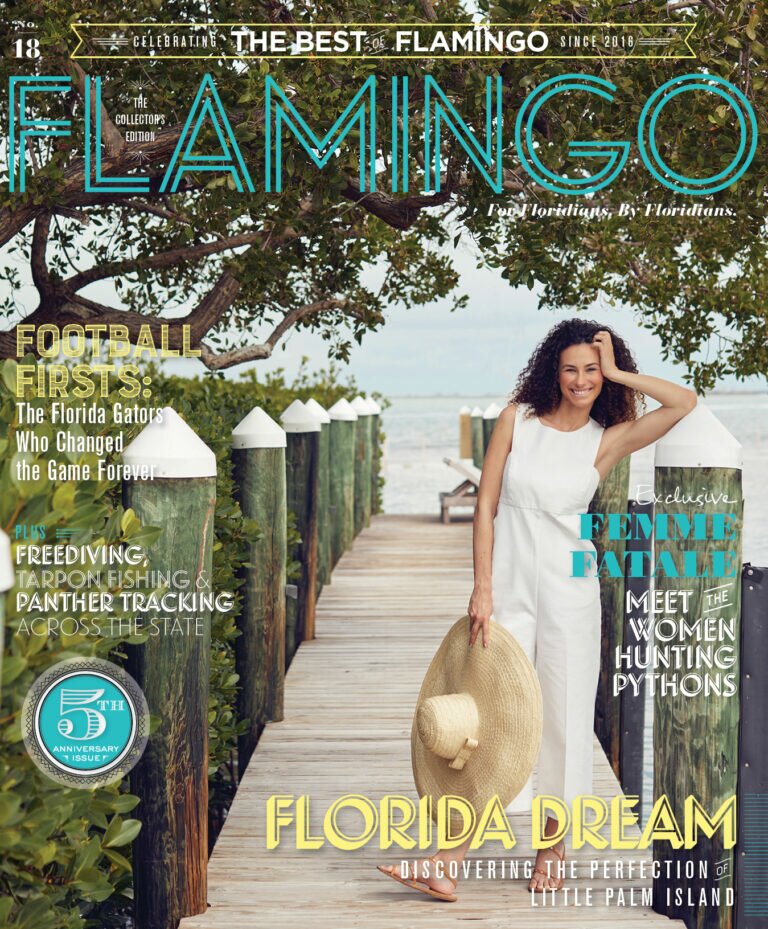
In the meantime, they learned a lot about digital media, which was previously on the back burner, since they were always so focused on bringing the next issue to print. COVID pushed all that to the forefront and made them rethink how they put out their content and how and when they release it.
“We now actually put out more stories than ever because of not having a (print) magazine as the driver of what we put on our website.” In addition, they started a weekly e-newsletter and now have more subscribers and readers than ever before. With Florida being a leader in the nation for returning to a sense of normalcy in a post-COVID world, Flamingo Magazine weathered the storm and might just come out the other side more successful in print and online. And with more people moving to Florida than ever before, the potential audience is certainly growing.
You can listen to the full interview with Jamie Rich on Episode 92 of the Agents of Innovation podcast on Apple podcasts, Amazon podcasts, Spotify, Stitcher, and SoundCloud. You can also follow the podcast on Facebook, Instagram, or Twitter.
Please consider supporting the Agents of Innovation community by becoming a member of our Patreon page today, starting at just $5 a month!
]]>
Dan has not only traveled the world extensively, he has also lived in long-term experiences in places that include South Korea, France, Costa Rica, and Mexico City.
“Part of the reason I enjoy slow travel,” said Dan, “you can arrive in a city, if you have two or three days, there’s always a quick list of things you’ll do… it’s only when you slow down and you give yourself a bit of time that you really get to feel the energy of the city.”
Early Interest in Travel
What first sparked Dan’s interest in travel?
His dad worked for Canadian immigration, so Dan said he grew up in a family, “where the idea of immigrants, and different cultures, and connecting with different people, that was a good thing,” he said. “Some people aren’t fortunate to grow up in that mindset.”
“It might seem different from travel,” he said, but if your mindset is one where you’re not comfortable with people who are different, then “you’re not so interested in going to places where people look and speak and act differently than you’re used to. Where, as for me, I was always curious, I always wanted to see these places. I had a love for that from a very young age.”
When he was a college student, Dan took a summer class that was a 6-week exchange program to Guatemala. They traveled in the country and studied the socioeconomics of Guatemala, and they lived on a coffee plantation for part of the time. “It was really a remarkable trip that opened my eyes to what travel could be like,” said Dan.
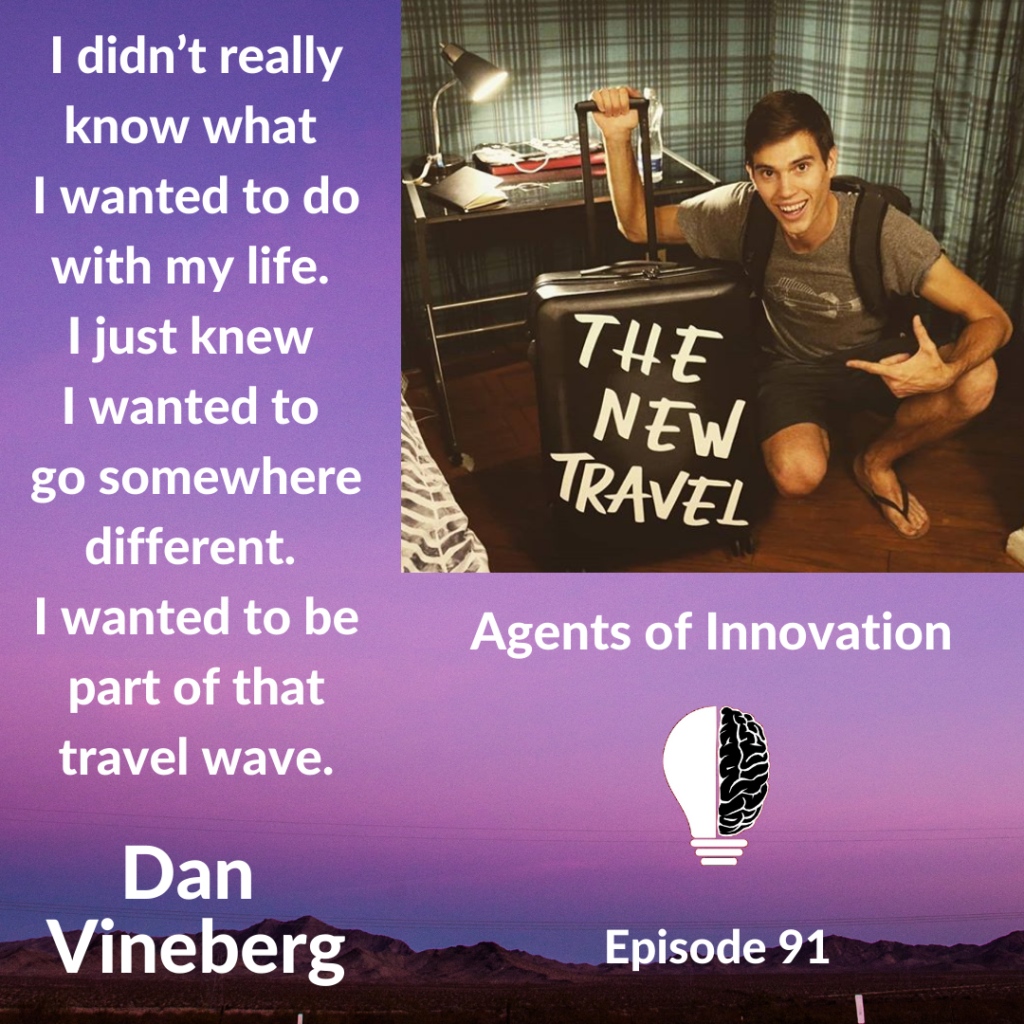
Then, after college, his first big experience living in another country was when he moved to South Korea. For over eight months, he taught English there. “I didn’t really know what I wanted to do with my life. I just knew I wanted to go somewhere different. I wanted to be part of that travel wave,” he said. “It was a pretty great gig. They paid for my flight to South Korea, they gave me a free apartment in South Korea, and then I’m there teaching English to school children and getting paid pretty decent money too.”
“For anyone who is starting out and wants to travel, I would encourage them to think about travel as maybe living in another country because even if you’re living somewhere and you’re working … it’s still traveling in a sense. Every day is still new.”
Travel Blogs to Travel Vlogs
Recounting when he went from Dan the traveler to Dan the travel vlogger, he said, in retrospect, he sometimes forgets about some of his earlier pre-vlogger travel days because “if I don’t film it, if I don’t have a record on YouTube, it’s almost like it doesn’t exist,” he said. Reflecting on this reminded him why “it’s a great reason to get into YouTube or get into some form of creative expression because it does make a very valuable memory.”
Before vlogging, Dan came from a writing background, studying creative writing in college. “Without that, I never would have become a YouTuber,” he said. During that opportunity living and working in South Korea, he didn’t initially start a travel blog because he thought, “Oh it’s been done before. What do I have to add to the conversation? I’m just another guy who doesn’t know what he’s doing with his life. Why should I have a blog?” A year later, he moved to France and decided to start a travel blog to capture the experiences.
“If I want to be a writer, I need to write,” he said. “What I learned is you develop your unique style and your unique voice through the act of doing,” said Dan. “The process of being a blogger develops you to the next level. Through that work ethic, through that process, I quickly became the writer I wanted to be in a sense.”
Writing about his travel experiences was always a hobby for him. “I had a few diehard readers which gave me the motivation to continue,” he recounts. A few years later, around 2015, he made his first YouTube video. “My first videos were to support blog posts. As I learned more about blogging, people were saying, ‘oh video can help with the SEO … if you want to get your blogs read, video can help with it.’”
So, he started creating more videos and embedding them into his blog posts. “Then the videos started getting more views than the blog posts, and also the videos were in some sense more fun to make.”
With writing, he always struggled to find the balance between what he wanted to write about and what was getting more traction. “With video I sort of did whatever I wanted to and it started getting more attention, so that’s when I realized there really is something special about video.”
Becoming a YouTuber
“In 2015-2016, there was sort of a shift happening,” said Dan. “It was when Facebook video was starting to appear on the feed a lot. YouTube was sort of maturing as a platform. People were realizing you could make a show on YouTube like you can make a show on TV. It wasn’t just for funny cat videos anymore. People are developing real audiences,” he said. While he acknowledges sort of being at the right place at the right time, he also believes we are still in the early days of YouTube. “It’s just going to grow and grow and grow.”
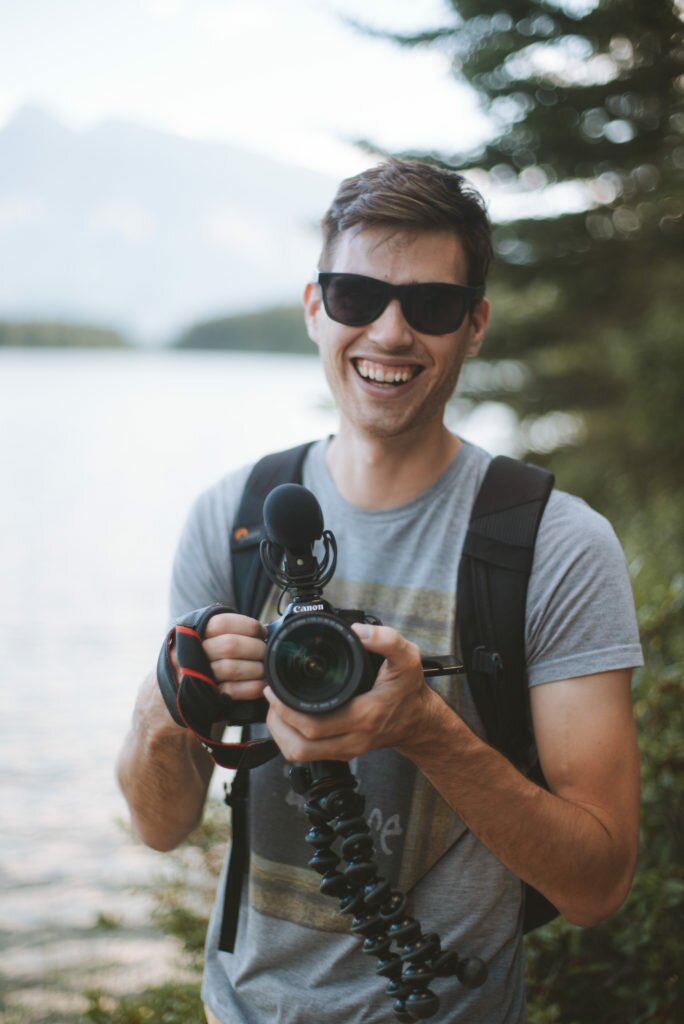
Dan said that when he first started making videos, “my equipment was so bad.” He began with his cell phone. Then he bought a silver GoPro 3. He realized he needed to continue to upgrade to capture higher quality video.
“I’ve had quite a few cameras but the one that really got me started was a Canon G7X,” a pocket-size point and shoot, with low light and decent audio. “The problem with the GoPro approach, the audio is no good. You can go underwater, you can do some fun things, but as a podcaster of course knows, audio is just as important or even more important than the video. If you are watching a video and the video quality is off, you can forgive that. As long as it sounds ok, you’ll keep watching,” he said. “But if the audio is off … it’s really just an unpleasant experience … so, realizing that audio is actually really important was a really big stage of that journey.”
He recommends starting small because “a lot of YouTubers get lost in chasing the high quality,” he said. You know — you’re not the Travel Channel — and you shouldn’t try to be. My approach has always been you just need to be relatable; you need to be honest; you need to show places as they actually are and people will gravitate towards that energy.”
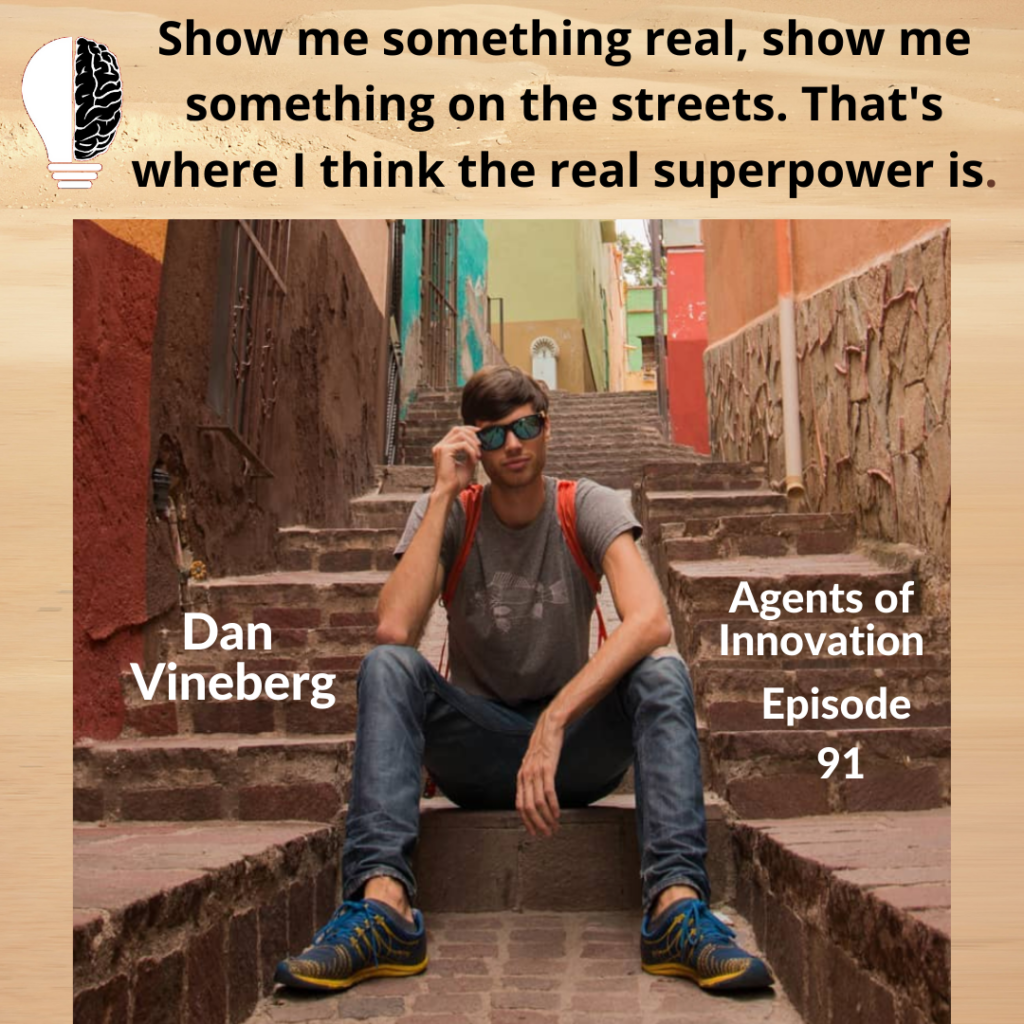
“To some extent, we are just kind of burned out on beautiful imagery. We just get shown that so many times,” said Dan. “Show me something real, show me something on the streets. That’s where I think the super power is.”
“It was a very slow beginning,” he recounted. “Your first few videos are not going to be that good … unless you have a good video editing background, you’re just not going to be that good. You need time. Reading some of the early comments, watching some of the other videos will help you develop. And just the process of doing it over and over will help you develop … don’t try to be a famous YouTuber at the beginning, because that will only send you down the wrong path.”
“It took me about a year to get my first thousand subscribers, which is pretty crazy,” said Dan. “When my channel is growing rapidly, I can get that in a week now, or even less.”
Building Two Different Audiences
For him, Mexico was the big spark where his YouTube audience really began to grow. “To some extent, a travel YouTuber is always building two different audiences. There’s the people who are traveling and then there’s the locals,” he said. “In some sense, the locals are even more important than the travelers, at least the way I’m building my brand.”
“I just want a Mexican who watches it to go: this guy gets my city. He adjusted to this place – because they know it best. If I want to be authentic, if I want to be real about what’s happening, I want to speak to the locals, I want to get them on my side,” he said. Mexico City has about 20 million people. “There’s a lot more locals than there are people visiting them. If you can tap into that energy, then you can really start to get a lot of fans, and a lot of viewership.”
He says part of why the locals tune in is because “there’s a fascination in what people traveling from other countries think, especially in countries that have negative stereotypes associated with them.”
Dan described what he’s doing as “a new form of media. I sometimes think of what I’m doing as trying to be the opposite of the newspapers – where the newspapers are just bringing you bad news from other countries every day. I’m trying to bring you something good.”
To grow your YouTube channel, Dan said to forget about hashtags or paying for YouTube reach. Instead, it comes down to making good content and “understanding what good content is – in the context of YouTube.” He suggested making clips about a specific question a viewer might have, making creative titles, putting keywords in the short description, creating attention-getting thumbnails, and the organization of your YouTube page.
Dan described the choice a viewer makes in converting to being a subscriber of a channel as “a higher-level commitment” than following someone’s account on other social media platforms such as Instagram.
“A Traveler First”
Even though Dan is now a notable travel vlogger, where it has become his livelihood, he hasn’t strayed from his first identity as a traveler, and is not simply a YouTuber who travels.
“I’ve always tried to remain a traveler first and foremost,” said Dan. “There might have been some videos where I lost track of that. That’s a natural part of this is a business — you want to grow it,” he said. “But if you end up doing too much of that, you end up losing that special feeling that got people attracted to your channel in the first place. You end up becoming the same as everyone else … and you lose passion for it as well.”
“I definitely think of myself as a traveler first,” said Dan. His advice to people who may be feeling a sense of burnout is: “just remember what got you started in the first place because that, in some sense, has to be your guiding star.”
Being a travel vlogger has been his full-time job since about 2017. One of the ways he has monetized it the most has been through YouTube ad revenue. It adds up slowly. It took him several years to even get a $100 check. But he added, “before you know it, you now have a part-time job.”
“It is a business, in the sense that it is scalable, and theoretically there is no limit.” Like any business, “it goes through up waves and down waves.” A pandemic of course can change things, especially for travel vloggers like Dan. But other things can change things too: like people’s interests and trends that change. “Things that were really popular six or seven years ago are not really popular today … as much as you want to stay true to yourself, you also have to have some sense of reality if you want to make it as a full-time YouTuber.”
Dan also has a Patreon page for those who want to support his creative content. “Patreon is a great way to get some crowd support,” he said. He also gets funding from brand partnerships, including from local tourism boards. While some of those benefits include getting his travel costs paid for, Dan also stressed that at some point, you do need to come up with appropriate rates to charge because your time is valuable.
“That was a journey for me as well, just to have the confidence to say that this ‘job’ that I just kind of fell into and was just following my passion into, it now actually is a job and I need to think of it that way and I need to put on my big boy CEO hat and think of the value I can offer.”
COVID19 Shuts Down the Travel Industry
Dan recalled when COVID19 shut down the world and he had just come back from his last trip in early March. “It was a very sad goodbye to travel; to be honest, it was tough.” For he and other travel vloggers, the early days of COVID were filled with much conflict. “Our job is to promote something that we’re being told not to do. It became a personal dilemma that me and a lot of other people had to go through.”
“I just stopped making videos for a while because I felt like I had nothing to add to the conversation but negativity,” said Dan. “My mind had gone to a dark place for a fair bit of 2020.”
“With my inability to travel, I just started checking the news too often. It just changed my mindset completely, which luckily, I’ve broken out of that trap and I don’t spend too much time even thinking about that stuff anymore. I’m just back to the things I can concern my own world: content creation and stuff like that,” said Dan. “That’s a bit of the journey I went through in 2020.”
“I Want to Reclaim This Year”
In October, Dan finally stretched his legs with his first trip and hopped on a plane to Mexico. This time, while he traveled into Mexico City, he got out of the city and spent time in a small town a few hours outside Mexico City to a “pueblo magico” called Tepoztlan. And he had a purpose: to work on writing his book. While the pandemic took away his ability to travel and create new travel videos, it did reawaken his passion for writing.
“I was pretty bummed out about the state of travel. 2020 had been the worst year of my life and I just decided I don’t really want this to be the story of 2020. I want to reclaim this year for myself and I want to change it into something else. And what I decided to do was – I’m going to write a book. I always wanted to write … but I had never given it my full go. And I never had anything to write about that passionately, but now I did. I had lived in Mexico for a year. I had experienced the travel life and I wanted to write a book about traveling and, in particular, about Mexico.”
He first started writing the book in the summer in Montreal. “It was going pretty good but, but as the months wore on, I felt like I was losing my track and I needed a spark,” he said. “And it just became so obvious suddenly, why don’t I go to Mexico?” He went to the Mexico he knew, off the beaten path, a bit more local.
The book itself has gone through a bit of a journey. It started off autobiographical, talking about how his perception of Mexico changed after living there. Then he decided, “I want to tell a story that’s bigger than that … I want to tell a really nice story about the travel experience … about what travel means when you get away from the resorts and you get away from the luxury a bit and you get to know real people, and you get to know real experiences, because that’s where the love of travel came for me.”
The book went from the story of Dan Vineberg and has been turned into a novel. “It’s a fiction which is based on various points of my time in Mexico so people who know me will recognize things I did from videos and experiences I had, but it’s another story entirely at this point. It’s been a journey … I’m really happy with the direction it’s currently on.”
While the book is no longer a nonfiction autobiographical story, Dan reminded us that “fiction will always have parts of your life. A writer can really only write about what they know … the human experience you had is what you can put into stories and what people can relate to. If you don’t have that, you don’t have anything.”
“I’m a book lover,” said Dan. “I wouldn’t have gotten into writing if I wasn’t. In some sense the experience of traveling and the experience of reading a good book are very similar. It takes you to another world, it shows people in a new way you haven’t seen before.”
The New New Travel
“At this point, travel is in a rough place,” said Dan, reflecting on the fact that COVID19 shut down travel for most people. “Of all the industries to reopen … travel will be the last one back.”
However, he is hopeful there will be a renewed spirit for travel soon enough. “There’s nothing like real life. Everyone is starved for real interaction right now. So, when things do open up, I think they will open up in a big way. Travel will rebound in a big way,” said Dan. “We could be coming up to a golden age. People need to realize after the darkness, when it becomes light again, it’s going to be a great time for everyone.”
Reflecting on His Journey
While 2020 has been a real struggle for everyone, it has given Dan Vineberg time to reflect and talk to his audiences in new ways.
“Not a lot of people know the journey you’ve been on because a lot of new people can arrive along the way. Part of the importance is not just making new content, but reflecting and letting people know what your journey has been – because if they know where you’ve been they can know where you’re going.”
“It can really be valuable to step back and say ‘hey this is how I got started, this is the journey it’s been on, this is what it’s turning into’ – it’s valuable for other people and also just valuable for yourself just to think about it. If I didn’t spend enough time thinking – like maybe it was the pandemic – which gave me the chance to stop and think … now I’m here and now it all stopped, but is this even where I wanted to be? Did I even want to be a YouTuber or did I fall into this through writing which was always my first passion and if that’s the case, how can I make writing more of the ecosystem that I’m building here under The New Travel?”
Dan once wrote on his website that his “deepest belief is there are good people all over the world, and travel can bring us all closer together.” He added, “My life’s mission is to share this message.”
He reflected that writing his book is getting him back to “the core idea of why I started and that’s a powerful thing.”
“You sometimes have to pause and ask yourself what you really want to be doing,” said Dan “ I always try to remind myself why I actually started wanting to travel or make videos or make posts in the first place and it goes back to that belief that travel is a force for good and travel will always be a force for good.”
“The more we can expose ourselves to other people and other cultures, the more we understand that we’ve been told a lie: we’ve been told the idea that most of the world is dangerous or not a good place to live … but the more you travel the more you realize there’s beautiful places everywhere… There’s places with honest people and decent people and hard-working people and everyone loves their kids and everyone loves to go watch a sports game on the weekend or call their mom or celebrate the holidays with family. The human experience is universal and I think too many voices have been trying to make us forget that simple fact. But that fact is true and if you travel with an open mind, you’ll see it.”
Dan added that when you travel, “you put yourself in other people’s shoes… That’s a little bit of why I think travel is a great thing. It teaches you compassion for other people, it broadens your horizons … it’s just the antidote to all that negativity, to all that nonsense you read in the paper sometimes.”
And for those who think you need to be rich to travel, Dan said, “There’s always a way if you really want to travel.” Perhaps with the world keeping so many of us apart in 2020, The New Travel will bring us back together again in whole new ways. We will keep following Dan’s journey because we know it is Agents of Innovation like him that will tread a path for so many of us. You can listen to the full interview with Dan Vineberg on Episode 91 of the Agents of Innovation podcast on Apple podcasts, Amazon podcasts, Spotify, Stitcher, and SoundCloud. You can also follow the podcast on Facebook, Instagram, or Twitter.
Please consider supporting the Agents of Innovation community by becoming a member of our Patreon page today, starting at just $5 a month!
]]>Claudio and his business partner Bryan Ballejo met in college. Both grew up in low-income households led by single mothers. During college, Claudio and Bryan started a promotions company for nightclubs. After graduation, Ballejo found his way into a great job in the corporate world. Sorrentino became a bartender while he began to work his way through a master’s degree.
Claudio was always into fitness. While he was building his body, he didn’t like the body hair that came natural to him, as a son of Italians and Brazilians. He didn’t have a lot of discretionary funding to get his body hair removed, so he found a company to hire him – and one of the benefits was laser hair removal.
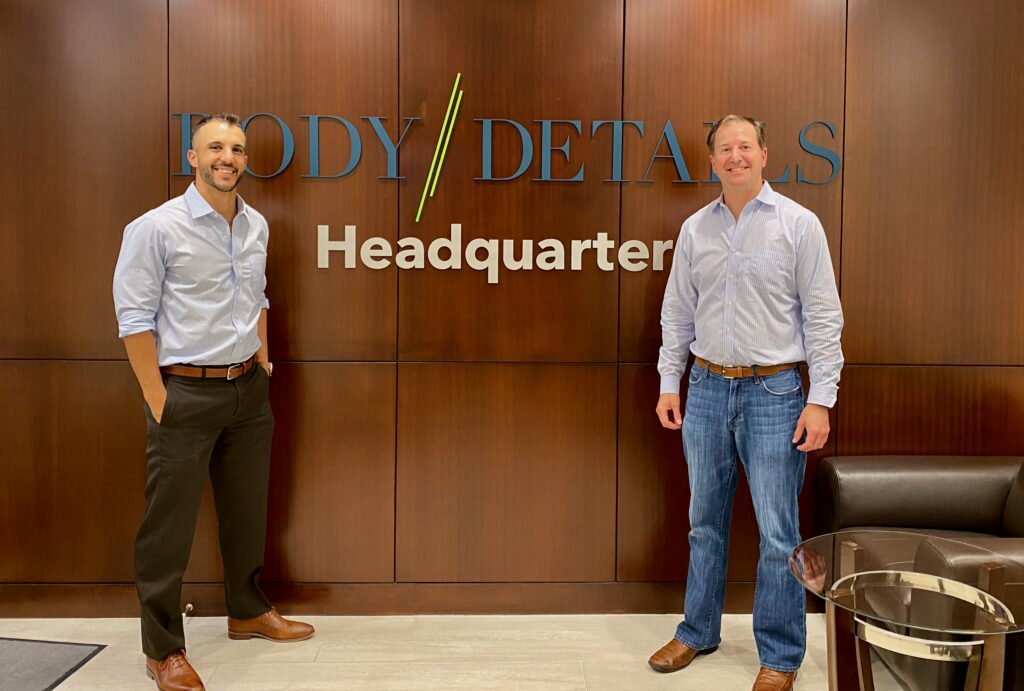
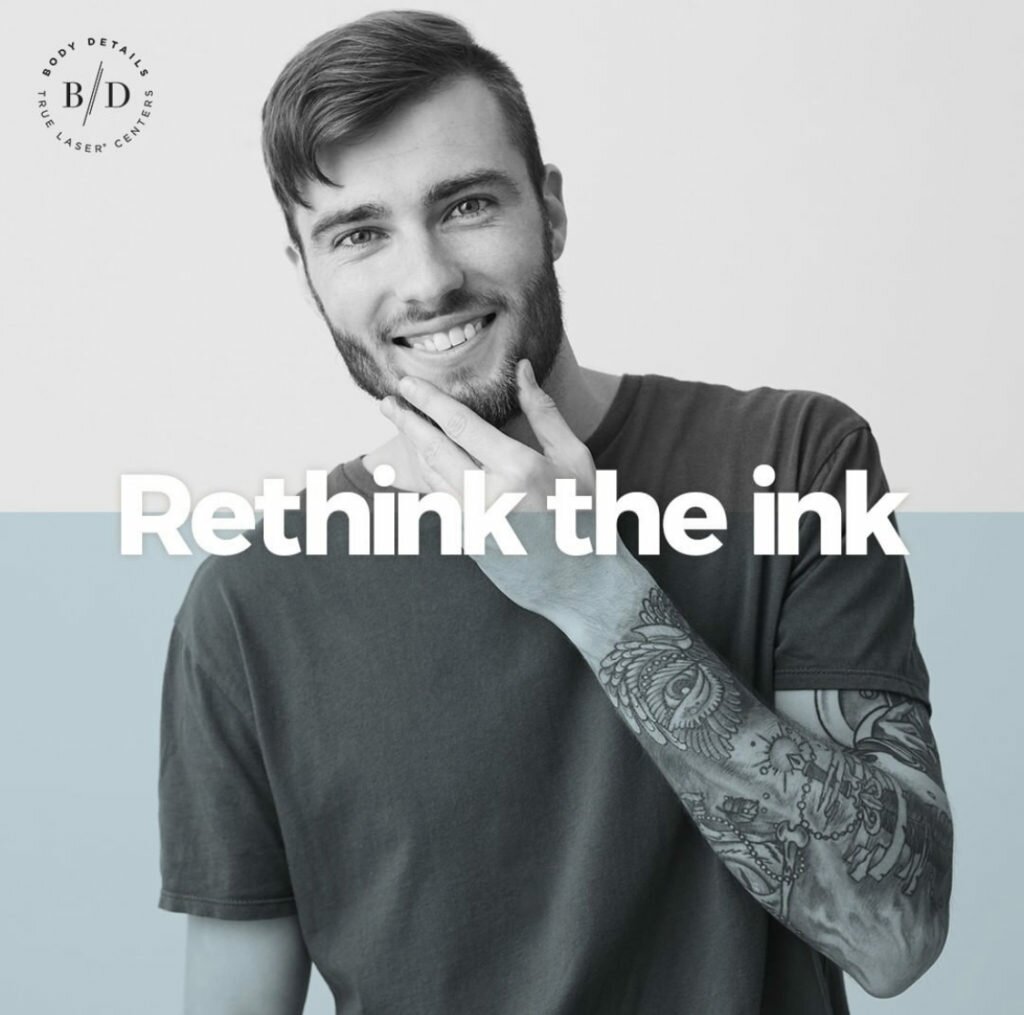
“In the process of getting that service, I realized this business is a phenomenal business,” said Sorrentino. “Everyone who is coming in there is interested. It was growing. People were highly excited about the fact of never having to shave again. And then I constantly had customers coming in and asking us about tattoo removal and services that weren’t being offered at the location I was at. So I thought to myself: is anyone doing tattoo removal in the area? And there was only one doctor in Fort Lauderdale and he only spent fifty percent of his time here. He came from New York.”
Sorrentino realized “we could corner this market.” While laser surgery like this had been around a while, not many people were doing it popularly. So, he wrote a business plan and tried to make it happen.
He called his friend Bryan who had also recently found the entrepreneurial itch. Bryan had an idea to start a pest control company. Claudio persuaded him on laser body hair removal and tattoo removal. Once Ballejo learned more about it, he loved the idea. They went back to their old college library at FAU to use the resources to research how to write a business plan and persuade investors to help them.
“We were both broke, didn’t know anyone with money, didn’t really associate with anyone with money,” said Sorrentino. “We needed about $600,000 to start the business.”
“I decided to pitch the person who I knew would be my harshest critic and destroy anything I wrote in there and if it was bad, he would tell me in a heartbeat – and that was my dad. My father has never liked any idea I’ve come up with,” said Sorrentino. “It was the harsh critic that I needed.”
“We pitched him,” said Sorrentino. “And shockingly, he loved it. It was the first thing I ever pitched him that he thought really had legs.”
His dad called a friend in New York and convinced him to come down and hear his son’s business plan. After his dad’s friend heard the pitch two weeks later, they both decided to invest in the business and they invested a combined $375,000.
“It was mind-blowing,” said Sorrentino, who didn’t expect this response from his dad. “It wasn’t any special treatment. We were going to split the business four ways and we were going to pay them back on their investment before any distributions were taken.” Claudio and Bryan decided to open the business with the capital funds they now had.
Claudio’s advice for those writing business plans: keep it simple. “People don’t want to read a book,” he said. “They want bullets and they want data.” Investors want to know why they should believe you. Back it up sufficiently with support.
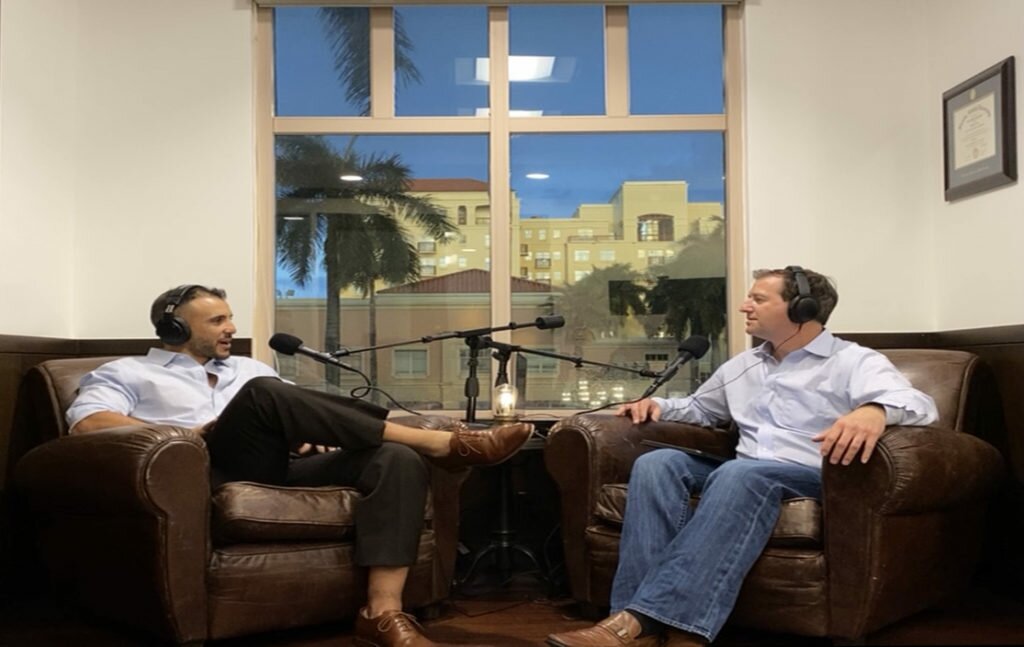
Sorrentino and his business partner had a business plan, but they are not medical professionals. They also do laser fat removal. All of these services require doctors and nurses to be on-site and involved in the laser surgeries. So, they also needed to persuade medical professionals working under their leadership to trust them.
“I think it’s important when people think about starting businesses of any kind – it’s very easy to see the obstacle and then get stuck,” said Sorrentino. “Real entrepreneurs who are successful – there are always obstacles – but you tend to ignore them. You have to get to a point where you see the obstacle but your sight of the goal blinds you to it.”
One other immediate obstacle he had was getting past the non-compete agreement he had signed with his previous employer, which did similar work. To avoid any issues in the non-compete agreement, they decided to open the business over 10 miles away and Sorrentino was not officially a partner in the business for the first two years.
“If you don’t start a business because another business exists, there would be no KFC, no burger joint other than McDonald’s, there would be no Pepsi, there would be nothing,” said Sorrentino. “Almost every business out there is some modification of a prior business.”
“I don’t view competition as an issue like most people do. If you’re in a space that’s growing that has a lot of opportunity, everybody can win.”
They opened their first location in Coral Gables in 2006. The first year they opened the store for 12 hours per day, six days per week, and commuted more than an hour each way from Boca Raton. They did over $900,000 in sales their first year. They then opened a second location in Aventura – and they started doubling in size every year.
Then the recession occurred in 2008. “We hunkered down to survive.”
When the economy rebounded, they continued to raise more money in successive cycles. Body Details has 12 locations today across South Florida, with 56 employees. They will soon be expanding into the Tampa and Orlando markets. They expect continuous expansion going forward. Body Details is not only a majority female company, but 53 of their 56 employees are female.
Claudio and Bryan are once again in an aggressive growth mode, with approximately 30% of their budget in advertising and marketing. One of the other challenges of this business is that once a patient has had their hair or tattoos removed, they are non-recurring customers, so this makes continuous investments in advertising and marketing essential.
When they do come in contact with customers who are celebrities or influencers, they may offer them complimentary services in exchange for using their images for marketing services. “We don’t have any relationships with paid influencers, but we get a lot of people that contact us … most of it comes from organic demand … who are interested in our services,” said Sorrentino.
They initially faced challenges in the early weeks and months of the COVID19 pandemic in the spring of 2020. “For seven weeks, every one of my stores were shut down by the governor’s order,” said Sorrentino. “We didn’t know if it was going to be 12 weeks, if it was going to be five months. We had no clue.”
This was the second time in their 15-year history that all sales stopped, but they still had to pay all their bills. They furloughed 46 employees but kept communicating with their customers via social media and their call center. “We were very blessed that our customers were very happy to stick with us and knew this would be short-lived.” They rehired everyone except for two employees who decided not to return.
In some ways, they are now benefiting from COVID19 as they have many customers who are not going out as much or spending money on travel, and using that discretionary income for services like theirs. In addition, being based in Florida is advantageous as Florida businesses like Body Details are seeing so many new customers because of the amount of people moving to Florida from more locked down states.

Sorrentino has learned that one of the biggest challenges in any business is dealing with people. “It’s hard to lead teams. People can be very challenging,” said Sorrentino. “I think every strong leader today needs to be capable of interacting with different personalities and managing communication around different people. Everybody learns differently. Everybody hears things differently.”
“If you are someone who needs encouragement or needs a pat on the back or who needs to celebrate wins – don’t be an entrepreneur,” said Sorrentino. “It’s the loneliest position you’ll ever be in. You won’t relate to most people on a lot of things.”
“When you leave as an employee, you go home and your life is your life. An entrepreneur never gets that luxury. My business is in my head, night and day, 24 hours a day. I go to sleep, I dream about this business,” said Sorrentino. “It’s an extremely heavy position to be in. I think that’s a big challenge that people don’t expect: the mental toll it takes.”
“There’s two types of entrepreneurs,” said Sorrentino. “There’s those who find something that they just live, breathe, and emote, and need to do every day – which is awesome,” said Sorrentino. “Then there are others, who like myself, when I started this business, who just can’t work for anyone else. I’ve never been good working for someone else.”
“They say an entrepreneur is someone who will work 80 hours a week to avoid working 40 hours a week,” said Sorrentino. “While I may work more than most, I work on my own terms.”
While he was the kind of entrepreneur who simply couldn’t work for someone else, he says, “Now I’ve learned to love the creation of it. That drives me at this point now. I’m enthralled with the idea of growing this company and seeing people work here.”
His advice for those aspiring to be entrepreneurs: “If you can find the thing that gives you the lifestyle you want and the passion you want, it’s a home run. You’re going to be ultimately successful,” said Sorrentino. Because when it’s hard and when things suck and you’re absolutely miserable and you don’t want to get up in the morning, but because you still love what you’re working towards, you’re going to do it. That’s the hard part. That’s when people quit.”
Claudio says that at Body Details, “we really try to hire culture – and if you are a strong culture fit, we try to give you every opportunity to grow,” said Sorrentino. There are many examples of promotion within. “We try not to recruit outside unless it’s ultimately necessary.”
Body Details is also philanthropically involved in the communities they serve. “We do a lot of service donations for raffles and auctions to every local organization under the sun,” said Sorrentino. “A lot of charities approach us … we’re just truly happy to be a part of the community in that sense.”
Claudio seems to be a natural entrepreneur. His first job in life was as a busboy at his father’s restaurant. He wanted to scuba dive and couldn’t afford it. So, he asked his dad for an opportunity to work. His father didn’t want anyone to think there was any nepotism, so he was extremely hard on him. “I was more servant than busboy,” said Sorrentino.
While his friends were out having fun, Claudio worked 12-hour days, every day, all summer long. He made $2,600 and bought all his own scuba diving equipment on his own. “It was a great and rewarding experience that allowed me to tie the mentality that hard work yields results.”
There are two key factors that he thinks makes him a natural entrepreneur. Most people see a problem and either cannot see a solution, or if they do see a solution, they don’t pursue it. “The entrepreneur can’t not pursue it,” said Sorrentino. “So when I see a problem and see a solution, I immediately try to pursue that solution and see if it’s viable … and if I find that there’s some path to pursuing it, solving that problem, and making money doing it, I’m in.”
Entrepreneurship wasn’t exactly in his sights as he entered college. He knew the safe choice was working for someone else, and given his upbringing in a low-income household, he didn’t even think of the possibility of owning his own company. “It’s hard when you’re growing up and broke to think: I’m going to start a company,” said Sorrentino. “Even if we were great at the idea of it, we had no idea how we were going to get the capital.”
Today, Claudio’s success as an entrepreneur has made him an agent of innovation who is often called upon to speak at corporate conferences, and schools, and for civic organizations. He is also now working on a book with the tentative title, Millions in Progress.
“Most of the books I’ve read around entrepreneurship are two kinds. You either get the person who is end of life and it’s a biography and they are talking about everything they’ve done,” said Sorrentino. “Or you get those very early-stage books by those people who are basically charlatans. They have done nothing, achieved nothing, and wrote a book to try to make money off a book.”
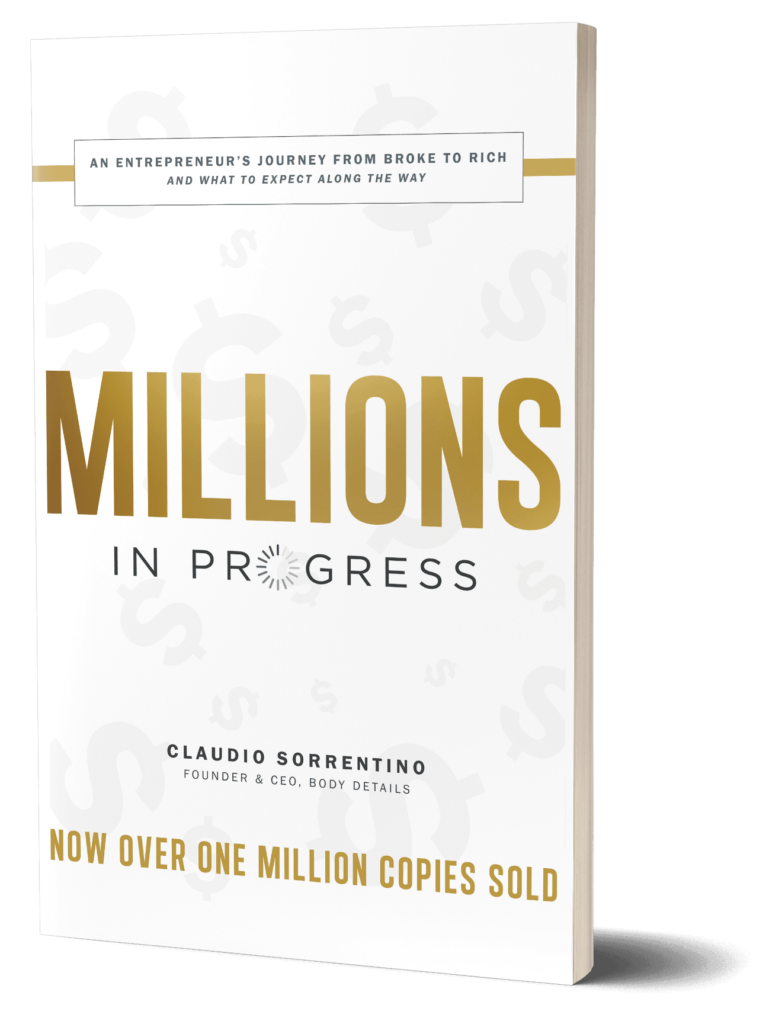
“I wanted to give people a better insight into the realities of entrepreneurship, into the struggles of entrepreneurship, and to what it’s actually like in the middle of it… I think people need to know what it’s really like. I think people need to hear the real story. The book talks about those things, sort of our journey in building this business, and everything you can expect along the way, and any tips I can give you to help mitigate you from suffering from some of the pitfalls we suffered from in that progress. It’s truly an in-progress book. I think it will either inspire some to get into it or make others stay where they are and stick with a career path that they feel is more capable for their mental health.”
“One of the fundamental things that everyone can work on at home is building a sense of self-confidence because you are going to suffer mentally starting a company. You just are,” said Sorrentino. “If you are someone who cannot pick yourself up and convince yourself to move forward on your own with no one helping you and no one supporting you, you’re not going to make it. It’s really hard.”
“The entrepreneurs who make it are the ones who have gone through all those trials and tribulations and don’t give up,” said Sorrentino. “There is not a single successful entrepreneur I have ever met who didn’t have moments of complete abject failure.”
Claudio recited a statistic that “98% of businesses fail in the first five years.” Then he added: “But do you know how many second businesses succeed of entrepreneurs who fail and try again and then succeed? Over 80 percent,” said Sorrentino. “So, if you knew what your odds to succeed the second time around were 80 percent, maybe you would. But do you know how many entrepreneurs try the second time? Almost none. Failure hits you so hard, you don’t try. But everything you learned in that failure gives you such an opportunity and such a high likelihood of success, that all you had to do was try again and you would have made it. What you learn is going to make you so good that the next time you are going to win – and you just have to have faith.”
Throughout his entrepreneurial journey, Claudio Sorrentino constantly seems to be turning problems into opportunities. “Necessity breeds innovation,” said Sorrentino. “Discomfort is the motivator of change.”
“You have to be in a place where something goes wrong and then you solve that problem,” said Sorrentino. “Every great business on the planet has done that.”
“It’s always the problem that leads to innovation. And so people need to stop seeing problems as these horrible things and start seeing problems as the opportunities in their lives.”
You can listen to the full interview with Claudio Sorrentino of Body Details on Episode 90 of the Agents of Innovation podcast, on Apple podcasts, Amazon podcasts, Spotify, Stitcher, and SoundCloud. You can also follow the podcast on Facebook, Instagram, or Twitter.
Please consider supporting the Agents of Innovation community by becoming a member of our Patreon page today, starting at just $5 a month!
]]>After graduating from high school in north New Jersey, Crespo joined the U.S. Marines. His last duty station was at the Naval Training Center in what is today the Baldwin Park neighborhood in which he lives.
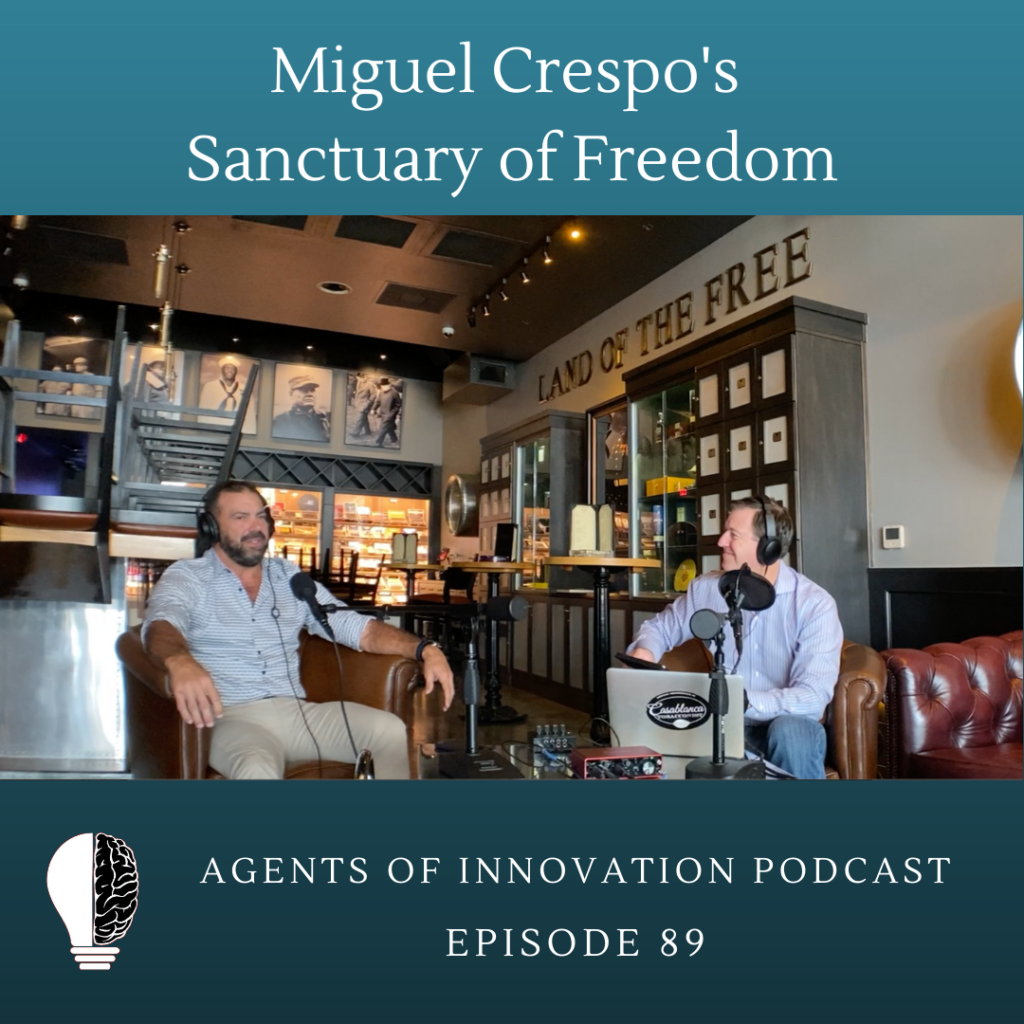
Once he finished his time with the Marines, with his last duty station being in Orlando, he used the G.I. Bill to go to the University of Central Florida, earning a degree in radiological science. He started his career in medicine. He now lives in Baldwin Park, a neighborhood less than 10 minutes from downtown Orlando that sits on the site of a former U.S. Naval Air Station. For a half century – going back to World War II, men and women in the U.S. military were trained in what is today known as Baldwin Park, before the base eventually closed in the 1990s. Developers saw an opportunity to build a unique neighborhood, surrounding the very large Lake Baldwin. Today, it is a thriving neighborhood with shops, restaurants, and even a cigar lounge.
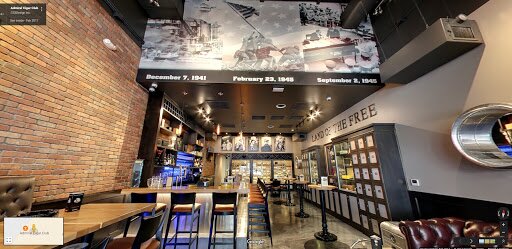
Miguel opened Admiral Cigar Club in Baldwin Park in 2016. The entire place is dedicated to the memory of those who served in uniform for the United States, with a particular focus on the Navy and Marines, as well as décor that serves to remind patrons of the sacrifices of previous generations,, with very large WWII posters, along with dates of important battles and victories in both the European and Pacific theaters.
“It’s good to expose the younger generation, even if it’s subconsciously, to what’s around them,” said Crespo. “When you look on the back wall and you see fifty, sixty years of history staring down upon you, you start asking: ‘well, who were those guys?’ Those were the guys that made it happen … those are the kind of folks we need to idolize and symbolize as heroes, that even when they experienced the most injustice, the most difficult circumstances, still rose to the occasion. That’s what it is to be an American.”
“Because of the opportunity that this country gave my parents to flee tyranny and oppression and socialism and eventually communism, I felt compelled, I felt honor-bound to give back so I joined the Marine Corps,” said Crespo. “I spent 8 years in the Marine Corps. I was in the first Gulf War. So hopefully the debt that this country gave my parents and the opportunity they gave my parents was paid in full.”
“I’ve been here since 1994. I saw the transition from the Naval Training Center to Baldwin Park proper,” said Crespo. “Admiral Cigar Club was actually born on the Fourth of July, 2016. It is American patriotic themed. I am of Cuban descent, so of course cigars are in our blood.”
The cigar lounge, however, is not Miguel’s primary business. In 1997, he and his business partner Ed Mashias established Professional Imaging Centers in Orlando. With locations in East Orlando and Kissimmee, and a mobile ultrasound presence that spans from Tampa to Ocala. “We go on-site and bring ultrasound imaging services to physicians in their office,” said Crespo.

He noticed that Baldwin Park had the right demographic to support a cigar lounge. He and his business partner do a lot of entertaining for clients already and thought it would be a great opportunity for them to own their own lounge and be able to open it to family, friends, and business associates for an upscale, controlled environment anytime they wanted. “The genesis for [Admiral Cigar Club] was as a marketing extension of our primary business,” said Crespo.
“We really did not have tremendous expectations that it would be as successful as it is because we were not sure if people share the same vision. Now society is so convoluted. The lines have been blurred. Here, this is a beacon of freedom. This is Guantanamo. Everything else out there is Cuba. This is a beacon of freedom. Here, a guy is a guy, a woman is a woman, there’s no blurred lines. When you’re here, you know where you’re supposed to be.”
“The nostalgic part of the cigar is the memories it brings of my parents and my father,” said Crespo. “There is something transformetic that happens when you’re smoking a cigar. You just feel a little different. It’s not just the physical response from the tobacco and the nicotine, but it’s – for me – it’s a nostalgic thing. I really enjoy it. I love spending time here [at Admiral Cigar Club]. The time that I enjoy the most here is when there’s no one else here and it’s just me.”
Miguel admitted that he and his business partner “don’t really have as much involvement as we had before. We have a great staff and they are the biggest reasons for the success,” he said. “We only provide the venue, the products. They really make it happen. If it wasn’t for them, it wouldn’t be as successful as it is.”
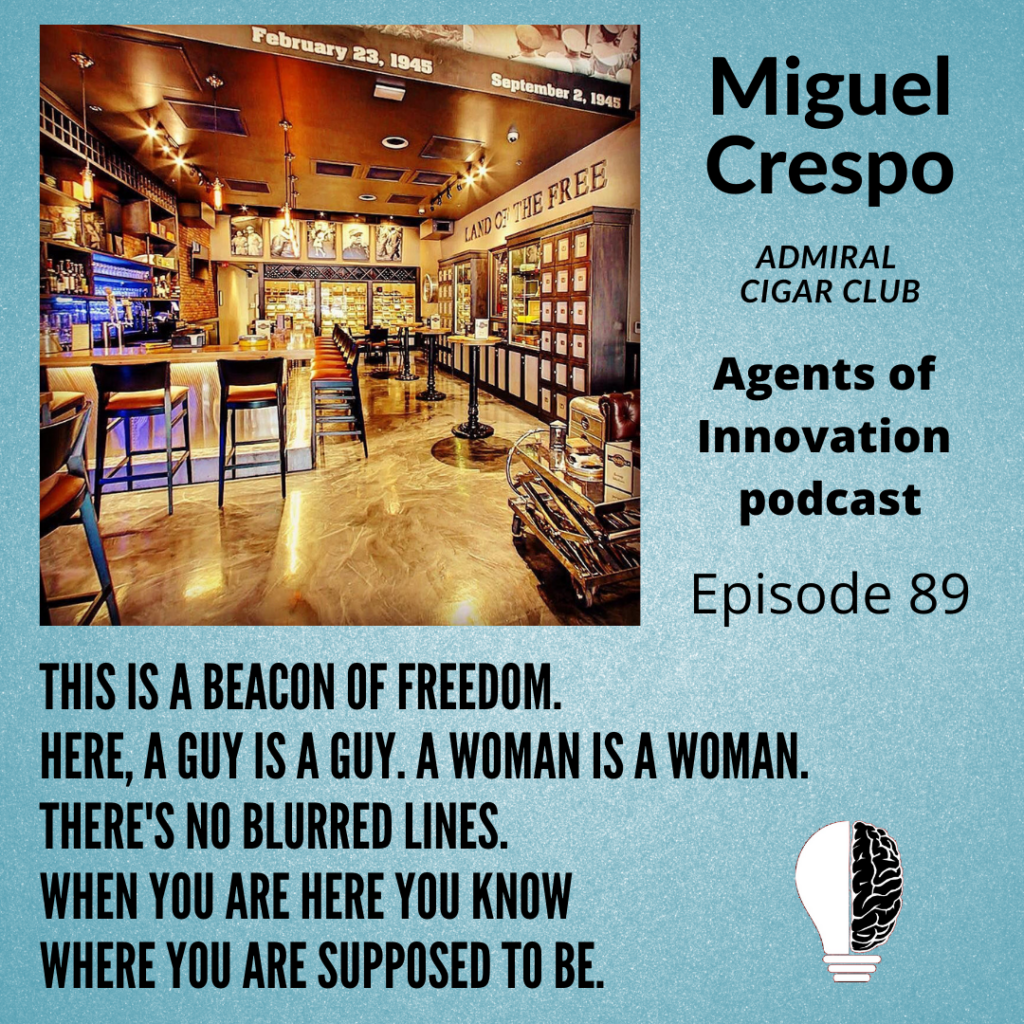
“We try to create an atmosphere for gentlemen and ladies to be a gentleman, to be a lady,” said Crespo. “The product that we sell the least amount of is cigars. Most of the transition of the bar changes as the night goes on. The demographic is a mix.”
Miguel’s first job was working for a landscaping company when he was in high school. This is where he truly learned work ethic. “Initiative is one of the best motivation tools to get you from point A to point B,” says Crespo. I know now there is so much reliance on others and the government and other stuff, but really, if the individual just takes the initiative, you can make it happen. But you got to do the work.”
Admiral Cigar Club, like many cigar lounges, has a great ventilation, filtration, and air purification system that was first intended to filter out the cigar smoke, but has also been beneficial during the COVID19 pandemic. As a smaller, more controlled environment, Crespo believes many patrons may view it as a safer environment than larger venues.
During 2020, COVID19 also brought many restrictions on those in the restaurant, bar, and lounge industry. However, for Crespo and his business partner, they were fortunate that Admiral Cigar Club is not their primary business.
“The bar suffered significant financial losses being closed for almost three months,” said Crespo. “And then to start back, we were way off pace, we were not on schedule as far as what we normally do. So thank God we had the other business and we were able to keep everybody here employed and paid. That was our honor-bound that we were trying to pay back all their hard work in the past.”
Fears of COVID19 caused the federal, state, and many local governments to shut down or restrict operations of private business.
“Danger is real. We have to mitigate danger; we need to do collectively and individually things to mitigate any kind of danger,” said Crespo. “But fear is something that we create. Fear is something that is debilitating and is compounded with the fact that if you have a real danger but you have a lot more fear there’s a significant overreaction. And in a free society, that we should strive to be, you give the public the real data, the real information. Let them choose for themselves and their families what’s good for them and the measures they need to take versus having a blanket policy that can have more debilitating effects for more people – and the old adage that the cure may be worse than the disease itself.”
He learned most of his leadership skills from his time in the Marine Corps, describing the small units and the fact “you have to work with whoever they put in front of you.” He adds, “When you are an employer and a boss, you can select people based on many, many factories. When you are in the military or in the Marine Corps, it’s such a small comprised unit organization, that you really have to work with whoever they put in front of you,” says Crespo. “And you have to assume that the leadership knows exactly what they are doing because the essence of leadership is followship. It’s a commitment. You are assuming that the person above you is there for a reason therefore following their lead will help us to create the ultimate goal which is the mission.”
He also credits his parents for “instilling work ethic and believing that you treat everyone the way you want to be treated. You give respect, and you get respect.” His formal education at UCF and other life experiences added to these foundations as well. “The education experience continues, including right now with this interview.”
Miguel says he has also learned that “when folks see passion, desire, and competency, they tend to believe in you.”
Professional Imaging is an outpatient radiology practice. For the first five years of their existence, they were a mobile ultrasound service. After graduating from UCF, Miguel got a job at Orlando Regional (which is now Orlando Health). He got experience as an inpatient and later transitioned to outpatient services. He then worked for a mobile imaging service locally. They had a relationship with a staple of private physicians – customers for them – that they were just going to let go.
“That’s the moment when hard work, dedication, and you hear the knock of opportunity coming, and the physician that says, ‘hey Miguel, why don’t you buy a machine, you could continue to do this yourself,’ recounted Crespo. He then went to his brother-in-law and his business partner Ed Mahias, and borrowed $50,000. “We started in his garage and the rest is the American Dream.” Today they have 85 employees.
In a health care industry that is constantly evolving and bringing new challenges, his lessons from the Marine Corps also taught him “to improvise, to adapt, to overcome is the goal.”
His advice for aspiring entrepreneurs: “Find something that you’re good at, that there’s a demand for, and that you’re willing to do the work for. You can almost apply that matrix to anything for success,” said Crespo. “Hard work and dedication create some luck. And there was some luck along the way. And surround yourself with good people … identify talent and put them around you. It raises your game.”
He also urges others not to be afraid to fail. “Failure is a prerequisite for success. You have to taste the vinegar of failure in order to enjoy the sugar of success.” Today, Miguel is enjoying that sugar of success. Sugar and tobacco. Those are tastes of his homeland of Cuba. And for Crespo, it’s the love of the leaf that embodies his sanctuary of freedom at Admiral Cigar Club. And around his lounge, freedom has a sanctuary that always tastes sweet and smells delicious – for cigar aficionados, anyway.
You can listen to the full interview with Miguel Crespo on Episode 98 of the Agents of Innovation podcast, on Apple podcasts, Amazon podcasts, Spotify, Stitcher, and SoundCloud. You can also follow the podcast on Facebook, Instagram, or Twitter.
Please consider supporting the Agents of Innovation community by becoming a member of our Patreon page today, starting at just $5 a month!
]]>Chris is a native Floridian who grew up in Broward County. He moved to Orlando to attend the University of Central Florida, earning his degree in Health Service Administration – and he has been in medical sales since graduating from UCF two decade ago.
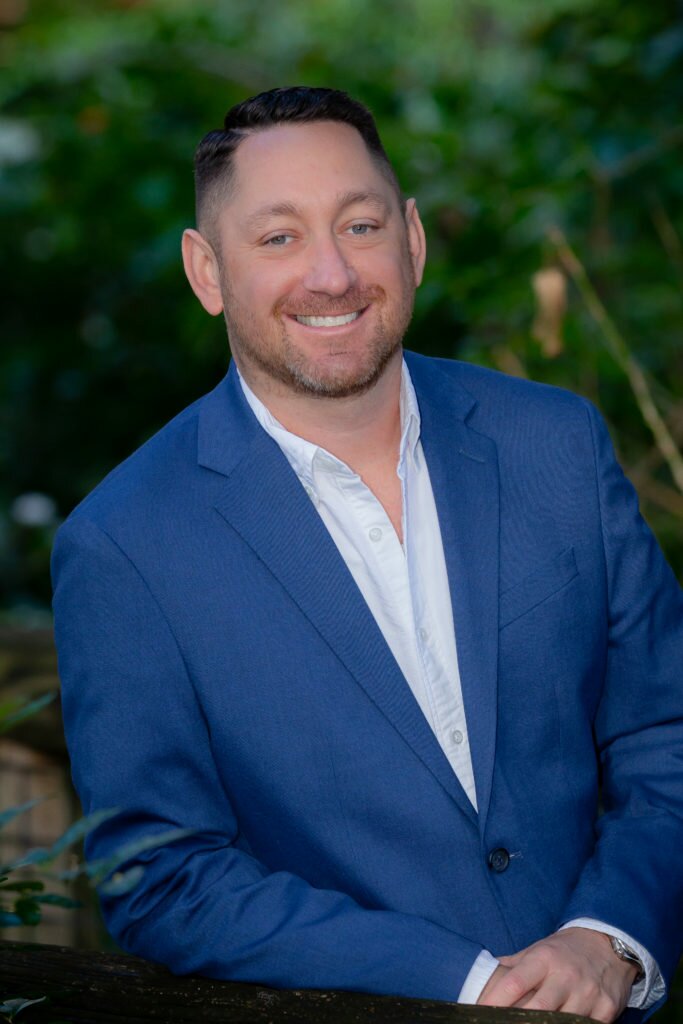
Chris currently works for Masimo as their VA Strategic Account Specialist for the east. “Being able to serve the VA and the veterans of our nation is an honor and a privilege – and being able to bring our advanced technology to them is a lot of fun.”
While at UCF, he became a disc jockey at some gigs in downtown Orlando and at fraternity parties. He still does an occasional gig here and there on top of his day job. During his time at UCF he also put together some parties and concerts, hosting bands such as Tabitha’s Secret, featuring lead singer Rob Thomas (which later became Matchbox Twenty) and Sister Hazel. In fact, this was Sister Hazel’s first gig outside of Gainesville. He became close with some of the band members as their influence grew.
“It was kind of silly some of the stuff I got to do in the first ten years of their run, with those guys, because I hired them to play a stupid fraternity party,” said Chris.
In 2016, Chris started Orlando Music Live, a website with corresponding social media sites on Facebook and Instagram. Orlando Music Live keeps a running calendar showcasing where you can find live music – any given day – in the greater Orlando area. It features artists playing in coffee shops and pubs to large venues like arenas and stadiums.
This passion project all started in 2016 when a friend called him on a Tuesday and asked him “who has live music tonight?” Chris wasn’t sure. Other than larger concerts and ticketed live shows, there was really nowhere to go and find your local singer/song writers or your local cover bands playing at smaller venues and bars. His friend told him, “It would be cool if there was a place where you could go and find out where live music was.” So Chris decided to be the change agent his Central Florida community needed.

Soon after, he started using Facebook and Instagram to promote the local music scene. And it grew. “I do it all free of charge. I do it all for the love of music,” said Chris. If he can get one extra person to go see a local singer/songwriter or go out and download a song from a local artist, “then I’ve done my job.”
Orlando Music Live isn’t just great for the locals to find live music, but also for the millions of visitors that come here on a weekly basis, during normal times.
“I feel like I’m providing a service to the local musicians where they can have a central place to put out their stuff and promote their gigs,” said Chris. “There’s so many different venues in town that have live music on a regular basis. Before I started this, I didn’t realize that. We all live in our own little bubbles,” said Chris. “There’s so much talent in this town.”
Chris is a hard-working guy and he shared with us that his first jobs as a teenager included being a bag boy at Publix and working at a movie theater. It instilled in him a work ethic that continues to this day in his day job in medical sales and his passion project building Orlando Music Live.
He also said learning to work from an early age doesn’t just instill work ethic, but it also help you in “just trying to find out where you fit, what’s going to motivate you, and what’s going to make you happy – because the happier you are at what you’re doing, the more productive you’re going to be, especially as you become an adult, you spend a lot of your time at work, so no one wants to be miserable.” He added, “There’s a couple of things in life that are important – you have a good mattress, you spend a third of your day in bed – and really enjoy what you do for a living, because if you don’t, that’s going to make for a miserable life.”
Chris grew up playing baseball and now coaches his son’s little league team (who is now 14 years old) and they went for a nice run at the state and national level. A proud father of a great athlete, he told us his son is “way more talented than I was.” Perhaps he has a good coach.
While live music was sidelined after COVID19 shut down most of the world, Orlando Music Live continued to grow. During the pandemic, Chris grew more than 1,000 followers on Instagram in 2020, with hundreds of unique hits to the website each week. During the pandemic, Chris found himself with more time, since he hasn’t been able to travel as much for work. He put a lot of that spare time into Orlando Music Live. “I’ve really grown the platform in the past six months, making things more automated, to where musicians and venues can email their stuff, where it automatically populates into the website, which then triggers me to automatically populate it into social media.”
When COVID19 shut down in-person events, including concerts, Chris reached out to a lot of local artists and encouraged them to do live stream events on a regular basis – and he promoted those on Orlando Music Live.
“The music community has really embraced what I’ve done,” said Chris. “I get thank you’s on a daily basis from venue and musicians. It makes me feel like what I’m doing is helpful and beneficial.”
Lately, Chris has also built a playlist on Spotify for Orlando Music Live, which features Orlando-area artists “to get to people to understand who is out there and go listen to them.”
“Venues have slowly but surely started to bring music back into their venues,” said Chris. “I have more gigs today – listed for tomorrow night – than I ever had beforehand. So, music is back out there.”
He shared with us the many innovations going on to help bring back live music experiences safely. The Dr. Phillips Center has started doing a front-yard series, where artists play outside, while fans are physically distanced in seated pods. Each individual pod seats about four or five people and you have to buy the pod. It fits about five folding chairs, pretty tightly. Temperature checks are given at entry and masks are required when you move about the venue. Every pod has its own QR code to order food, drinks, or merch.
The Plaza Live does a front porch series on Thursday nights from now through about March, and the City of Apopka has an event every Saturday at their outdoor amphitheater.

Artists have faced an especially difficult time during the past year. “From an innovation perspective, you are somewhat limited by your audience. If you have this great live stream and no one is watching it or no one is tipping you, it doesn’t matter,” said Chris. “Part of what I’ve tried to do is just centralize the music scene in Orlando in one spot. If you have one social media page you go to every day, it should be Orlando Music Live so you can figure out what’s going on.”
“It’s been a very challenging time, but I’m hopeful that what will come out of this is a lot of great music,” said Chris. For live music fans who go through the same struggles, Chris believes there is more hope on the way.
“In normal times, my non-work life revolves around sports and music, and both of those things were taken away,” said Chris. “Thank God we had live streams to keep me sane throughout that period of time.” After attending his first big music show recently, Chris said “It felt so good … it was exactly what my soul needed.”
Chris believes live streams will continue beyond the pandemic and he “wouldn’t be surprised if even some of the larger touring acts will incorporate some type of live stream into their concerts moving forward,” with different ticket prices for live streams and the in-person experience. “I really do think this pandemic is going to change how we do business for everything, and music is no different. I do expect to see more live streaming even when live events come back.”
He also thinks big concerts will be back in full force in 2021. “I fully expect things will be normal-ish by the end of Q2 [of 2021]. I’m hoping much of the summer concert tours that normally happen will go on as scheduled this year. That is my hope, especially as the vaccine rollout picks up momentum and steam.”
Venues, especially large ones, might even require something like a vaccine passport card to attend events. Chris says, “I have no problem whipping out my vaccine card if that means I can get into concerts sooner and get back into baseball stadiums sooner and travel again.” Since he works in the medical field, he was fortunate to get his first vaccine shot in January.
Chris does his best to help fans discover new local music. Every month or so, Orlando Music Live puts up six featured artists and six featured venues. He tries to rotate this to introduce artists and venues to people.
“My advice is not to promote one particular artist but to try to get out and expose yourself to as many different artists and venues as you possibly can because until you go out and listen to someone you’re never going to know,” said Chris.

Chris recently partnered with a local merchandise company, Impress Inc, to develop Orlando Music Live shirts, hats, and other merchandise. Five dollars from every purchase goes back into the local community. His first donation went to one of his favorite local music venues, Will’s Pub. “I want these places to be there when things are truly back to normal.”
This highlights the fact that in addition to artists and fans, venues have been struggling as well. “Thankfully Orlando has done relatively well,” said Chris. “I haven’t seen too many venues go under yet … but I know many communities have not fared as well.” As one example, Austin, Texas – noted as the live music capital of the world – has already lost about thirty percent of their music venues.
His advice to everyone: “Get out and see some music. At the end of the day that’s all I want. Get out and see some music.”
You can listen to the full interview with Chris Gonzalez on Episode 88 of the Agents of Innovation podcast, on Apple podcasts, Amazon podcasts, Stitcher, and SoundCloud. You can also follow the podcast on Facebook, Instagram, or Twitter.
Please consider supporting the Agents of Innovation community by becoming a member of our Patreon page today, starting at just $5 a month!
]]>
Founded by Kelly Shackelford 31 years ago, First Liberty Institute is a nonprofit organization supported by donors from all over the country. While today they have 50 people on staff with national headquarters in Plano, Texas, they take up cases around the country, often with the help of affiliated attorneys doing pro bono work on behalf of clients wishing to defend their First Amendment rights.
“Our mission is to restore and protect religious liberty for all Americans. We will defend any religion anywhere in America, so long as that person is simply seeking to live according to what they believe, in keeping with the law and the Constitution, then we’ll defend their right to do so,” said Watts, who has a focus of expanding public awareness of First Liberty’s mission, legal matters, and educational projects by coordinating communication with community leaders, influencers, policy makers, and the public at large. Watts, who was born and raised in Jonesboro, Arkansas, also has a legal background himself, receiving his J.D. from the University of Mississippi and has worked in various political capacities as well as for other nonprofit organizations.
“I tell people I practiced law just long enough to know I didn’t want to practice law,” quips Watts. “However, that might have been different had I known about First Liberty Institute back then.”
Some of the innovation they bring: a mix of national legal experts on the subject matter, combined with local knowledge from affiliated attorneys around the country, with a focus both in the courtroom and highlighting issues in the press. They have an extremely high rate of success. “Our first goal is always to win for the client,” said Watts. “But sometimes the case takes on a bigger impact – especially if you get to an appellate ourt level or a Supreme Court case – where you create a better precedent going forward for everyone.”
First Liberty Institute has been very busy during the COVID19 pandemic, where government at various levels has been treating religious services very different than they are treating other businesses or other organizations.
Lathan describes his role as more behind-the-scenes. “I’m kind of legal’s man in our marketing department and marketing’s man in our legal department,” said Watts.
“Most law firms shy away from press. We incorporate it into our legal strategy,” he said. It’s not only a way to bring public pressure to their opponents in the legal case, but also “a way to educate the public about what their rights are.
“A lot of times people are willing to stand up what they believe in but you need to understand what your rights are and how to do that,” said Watts. Many times they get calls from people who saw a story in the press about a case that First Liberty Institute is involved in – that is similar to a situation they are experiencing in their own lives.
Another innovative thing that Lathan and his team have brought to First Liberty Institute is a new YouTube series called Legal-Ease. “Basically, my job is to translate legalize into English,” said Watts. One of his colleagues said “That’s what we have to call it, it’s legalize, but we’ll make it ‘e-a-s-e’ as in we are making this easy to understand,” recounted Watts. “We wanted to do short, legal explanations of what we do, how it impacts you, but deliver it in a way that’s entertaining to people, so they learn a little bit of something, but it’s also a little more light-hearted.”
During COVID19, they even had a funny video about their COVID19 victories, and asked whether they were allowed to be funny again, and laugh at some of the ridiculous measures that caused the hardship so many of their clients had been going through during the economic lockdowns which prevented them from expressing their freedom to worship, especially during a time of a health crisis, increased isolation and loneliness, and a spike in mental health cases and suicide rates.
“The government clearly has an interest in protecting public health but the primary purpose of the government, according to the founders, is to protect the rights of the people, and so anything they do has to balance those interests and that’s really what our position in all the cases we’ve engaged in has been,” said Watts.
“People want to be together, it’s a natural human instinct, and particularly people of faith,” said Watts. “I mean we talk about public health; since when is spiritual health not part of health?”
First Liberty Institute filed the very first lawsuit in the country regarding religious liberty and COVID19 – and won. “It really set the tone going forward that, yes government, you do have an interest in protecting public health, but you have to balance it against protecting the God-given rights of the people and the very first one is religious liberty.” First Liberty Institute hasn’t lost a single religious liberty case related to COVID19.
There are many religious liberty cases that First Liberty Institute takes up that go beyond church services, but also protects the right for citizens to run their businesses, pray on the job, or in schools, and still have the right to their freedom to exercise their beliefs. These cases often also impact people’s livelihoods.
“Even people who are not religious should care about religious liberty – you still have a set of beliefs you want to live your life by,” said Watts.
If you or someone you know are experiencing a religious liberty violation you can get legal help from First Liberty Institute by filling out a form on their website. You can also help support their work through a tax-deductible donation.
For those who might be seeking a legal career in helping people with religious liberty, Lathan recommends reading The Federalist Papers, which were written by Alexander Hamilton, James Madison, and John Jay, in support of the U.S. Constitution at the time it was being debated. He also suggests reading some of the correspondence between the founders during that time, such as the letters between John Adams and Thomas Jefferson. “Those original sources will give you a better education, in my opinion, of what the Constitution was intended to do and how it should be applied, even today, than anything you will learn in law school,” said Watts.
You can listen to the full interview with Lathan Watts on Episode 87 of the Agents of Innovation podcast, on Apple podcasts, Amazon podcasts, Stitcher, and SoundCloud. You can also follow the podcast on Facebook, Instagram, or Twitter.
Please consider supporting the Agents of Innovation community by becoming a member of our Patreon page today, starting at just $5 a month!
]]>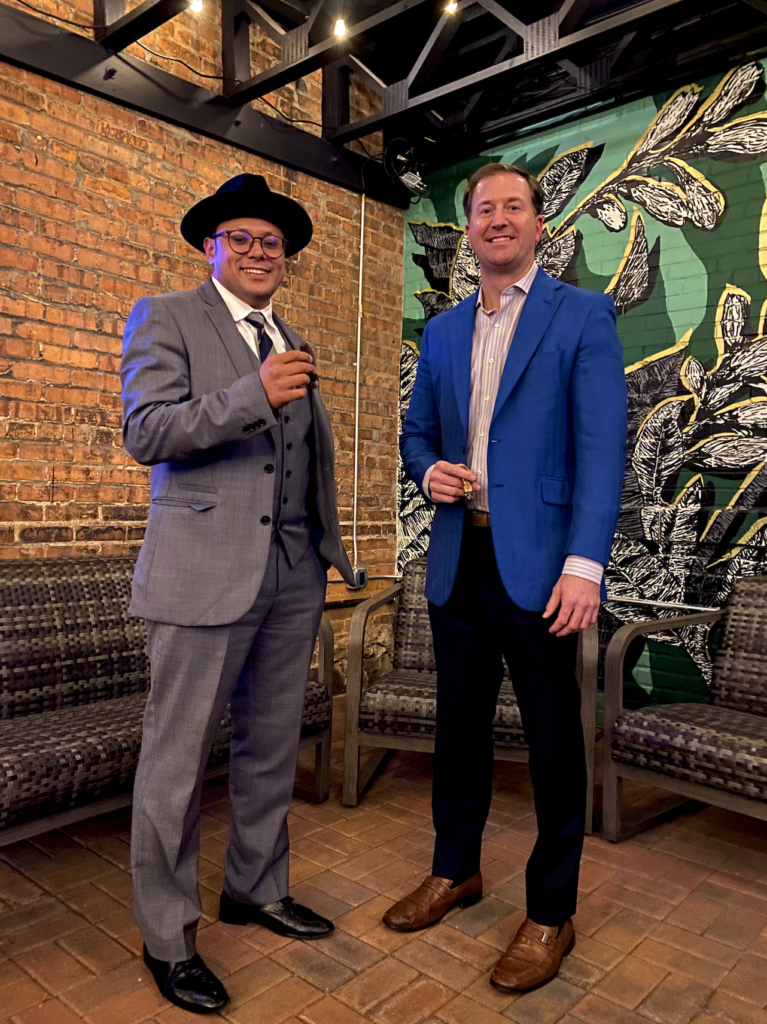
Sam originally hails from Casablanca, Morocco. His father was a banker, his mother was a nurse. They encouraged him to go to school and he was not allowed to work a job. But the call of the entrepreneur was inside him and he followed another path.
At the age of 20 years old, he traveled to the United States. His parents sent him with just $300. He arrived into the Atlanta airport and made his way to Durham, North Carolina, where one of his relatives had been living and gave Sam a place to stay for his first six months in the U.S. That same family member also helped him secure his first job, selling clothes at a store in the mall.
When Sam arrived here in 2005, at the age of 20, he did not speak any English. He did, however, speak Arabic, French, and Spanish. He worked jobs in retail, restaurants, convenient stores, and gas stations.
Despite a communication barrier with customers as a salesman at that first clothing store in the mall, he still ended up the second-best salesperson in the store. But he had a goal: “Work for myself, be my own entrepreneur, be successful, have a future on my own. I don’t want my parents to help me to build my life,” he said. “I just wanted to choose my own path.”
Souhail said his experience in the United States has showed him this place is full of so many hard-working people. “People take pride in what they are doing,” he said. “It’s definitely the land of opportunity … there’s more opportunities in this country than anywhere you can go.”
His first experience working in a restaurant showed him it is extremely difficult work. As an immigrant, he worked below minimum wage and noticed how immigrants were treated differently than others. “I definitely learned how to not give up, to work harder, and definitely not [mistreat] my coworkers the same way.”
One employer he worked for owned a convenience store, a gas station, and a tobacco shop and Souhail was moved around into different roles at all three of them. At the tobacco shop, they had a small humidor within it, with cigars. He mostly enjoyed talking to the customers who bought cigars, the kinds of conversations that surrounded those cigars. That seemed to plant a seed inside him. After these various experiences, he now had some ideas of various kinds of businesses and the ones he might be most interested in starting.
For about four years, from 2005 to 2009, Souhail worked 12 hours a day, seven days a week. Some days he worked at the convenience store from 7:00 AM to midnight. He had very few days off.
“If I took a day off it was Thanksgiving, when the restaurant closed, and the mall closed.” He added, “and a half-day on Christmas. The mall did not close on Christmas.” He also never visited Morocco during those four years, however family and friends did visit him a few times and he would see them around his work hours. “I was laser-focused on work. Just working and picking up as much experience, learn from other people’s mistakes, learn from my mistakes, and save as much money as I can,” said Souhail.
During part of his journey, Souhail was homeless. For several months, he slept under a bridge. “It made me be stronger and built my personality,” said Souhail. “I was homeless. I did it. I slept under the bridge. It was rough, but it makes you appreciate anything you have. It makes you appreciate roof above your head, food on the table, cigar in your hand, clothes above your shoulder.”
For those who might be facing similar challenges in their own life, Souhail’s advice is: “You just got to keep focusing, keep your head above water, you got to keep going, don’t give up.”
Between all these jobs, he did manage to meet a beautiful young woman named Brooke, who he married in 2008. He considers her his best friend and now also his business partner. In 2009, they moved from New Bern (on North Carolina’s coast) to the mountains of Asheville, NC.
In 2011, they opened their first store, Tobacco Plus, on 6 Eagle Street, in downtown Asheville. “I was extremely excited, the sky was the limit, and when we opened up the first day, we made less than $20,” said Souhail. While he primarily sold cigarettes, pipes, cigars, drinks, and snacks, he began listening to his customer’s needs. “As an entrepreneur, I don’t follow what I want, I just follow what the customer wants. Customers pay our bills. We are in the retail business for the customer, not for us,” said Souhail. When the customer asks for something – especially more than once – he begins stocking those items. He kept the store open every single day, no holiday breaks, for two years straight.
His wife had a dream of going to culinary school, but at times put school on hold to help her husband Sam build their business. “She gave up her career helping me in the shop,” said Souhail. “That really touched me a lot – to find somebody in your life that are able to give up their career to make you more successful than even her – because it’s her business as well – that was a lot; it was like wow,” said Souhail. “It was above and beyond true love.” While Sam is the man out front, the face of the business, talking with customers, his wife does the hard work behind the scenes, he says.
“We disagree at work – we should – and when we come to work we are coworkers, so we can talk, we can argue sometimes, we can have different opinions and that’s what makes us a good team, that will make us more successful,” said Souhail. “As soon as we close the business door, me and her, we are friends, and husband and wife outside, and we try to keep that relationship separate, so when we are at work we strictly talk business and we disagree – and I don’t think there’s anything wrong with disagreeing; in fact, sometimes you come up with better results when you disagree with your team.”
“If you have different opinions, it doesn’t matter who is right and who is wrong, we have to figure out what’s the best solution for the business long-term,” said Souhail. He also says that if you want to be a successful entrepreneur, listen to your coworkers (including employees, which he still calls coworkers), treat people the way they want to be treated, and gain the customers trust, which you can do best by being honest with them.
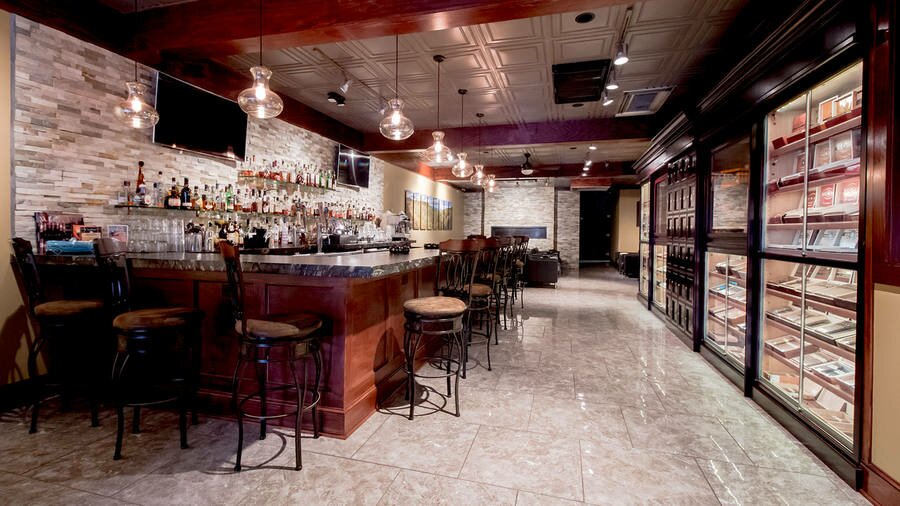
In 2016, they opened Casablanca Cigar Bar in the Biltmore Village in Asheville. The lounge is very high end and has been featured in Cigar Aficionado magazine, which said Sam’s bar “has raised the game in North Carolina’s artsy mountain city.”
“This is the place, if you want to relax, you should be at Casablanca,” said Souhail. “We have two kinds of customers: the ones that they already have a great day and they want to finish it with a great cigar and they come to join us and we will definitely make it worth the trip; or the ones who have had, sadly, a bad day, and they want to convert it into a good day and so they can come and join us for a cigar. Either / or we always have a happy ending for our customer and before they leave, they have a huge smile and thank you before they leave. That’s what you get when you do what you love and have a passion. Timing doesn’t matter. We are patient with our customers, we would love to serve you, we would love to pick out a cigar for you, we would love to bring you into the industry and show you more about the cigars and the rest of it.”
In 2017, Sam recruited one of his customers, a retired man named Tim Rayburn, to become the manager of Casablanca Cigars in Asheville. Within days of Tim starting to manage the lounge, Sam and Brooke left for Morocco – for two years! They trusted their coworkers to run their two shop and lounge. “If you cannot trust your coworkers … you will never be able to leave,” said Souhail. “I know so many business owners, they cannot leave their business for a day.”
Sam returned a few times each year to check in. And, in 2018, during one of his visits, he bought a property in Hendersonville, where he later opened his third business, Casablanca Tobacconist, opening their doors to customers in June 2020. This is where we met for our interview for Episode 86 of the Agents of Innovation podcast.
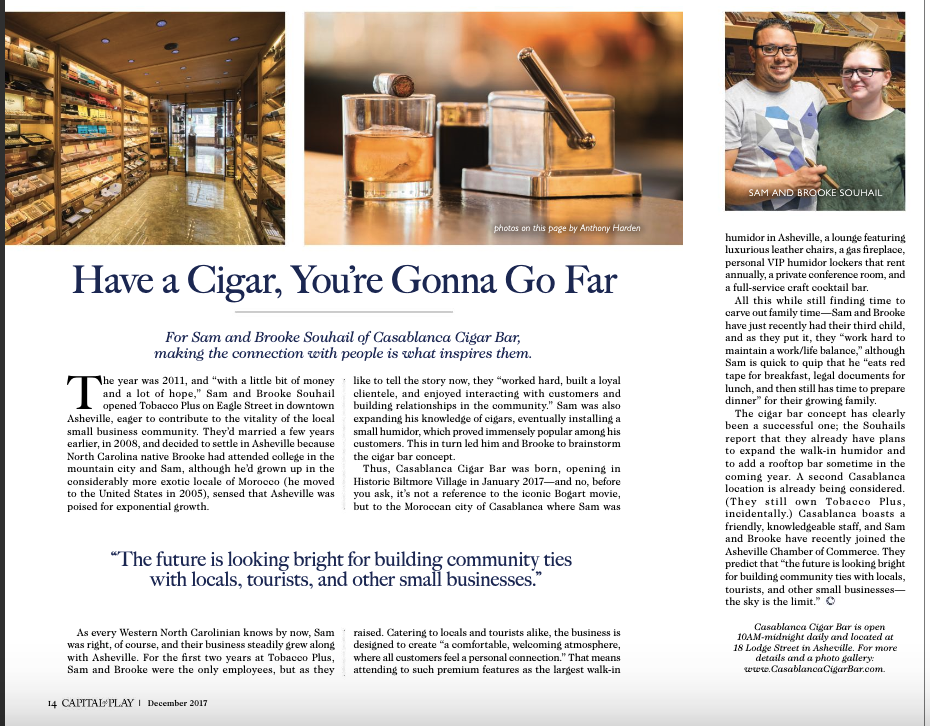
While abroad, he and Brooke traveled through Europe for six months, including visiting his sister in Belgium. During their time there, their third child was born (in Belgium).
They returned to North Carolina in early 2020, for what they thought would be just a few months. But then, COVID19 hit, shutting down travel, the country’s borders, and many restaurants, bars, and lounges.
During COVID19, the Asheville location has not been able to serve alcohol since March 2019, by order of the Governor or North Carolina. They decided to close their doors for a month in the early days of the pandemic, in March and April. However, they have now been reopened for quite some time and they do plenty of cigar sales that has kept them afloat. In fact, despite the lockdowns, and the inability to sell alcohol, they have gained more business in 2020. While their Asheville location was closed, they spent some of that time on refurbishing their new Hendersonville location to prepare it to open to customers in June 2020.
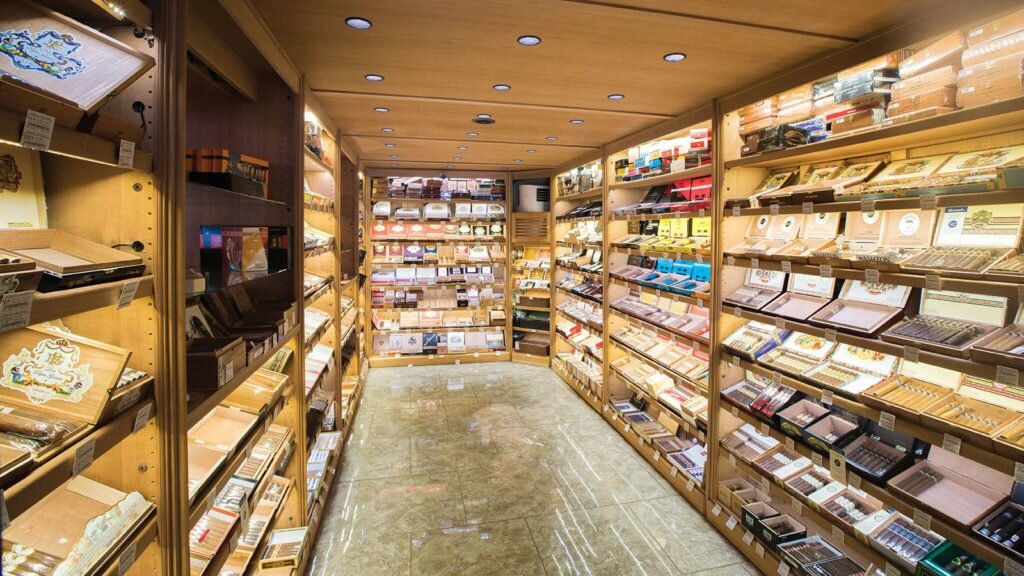
Customers in Asheville have access to lounge chairs, a conference room for business meetings, and large screen televisions for sports and news updates. In Hendersonville, they have both an indoor and outdoor patio space. “We don’t cut corners,” said Souhail. “I don’t like to cut corners.”
Reflecting on his story of coming to America fifteen years ago, with just $300, and the success he and his wife are now enjoying, Souhail said. “There’s nothing better than starting from scratch. Start from the bottom and work your way up. It feels so much better. You feel honored. You feel like you are self-sufficient,” said Souhail.
“Have a goal. Stick to it. And don’t just have a plan. Have a plan A, B, C, D, E,” said Souhail. “If this one did not work, you jump to the other one.”
He and his wife Brooke were so focused on their goal, they sacrificed enjoying the finer things of life and were extremely focused on saving every dollar they could. They had a weekly combined budget for the two of them of about forty to sixty dollars per week: this included groceries, all food and drinks, gas, and every other kind of living expense other than rent.
“Remember, we were in our 20s,” said Souhail. “I did not enjoy my 20s as like any normal 20-year old person, male or female. I just worked so hard and saved as much as I can.”
“You need to give up something to get to point B,” said Souhail. “If you want to reach your goals, if you want to be successful, you got to give up something.” He talked about the fact that he knows why his father did not give him more funds when he was young. He wanted him to learn how to be self-sufficient.
“Kids are smart and if they can pick up something now, it is stuck for life,” said Souhail, who is now a father of three. “I am trying to teach my kids: nothing for free, work for things, make sure they clean up their bedroom before they come to breakfast, make sure they clean the mess after themselves.”
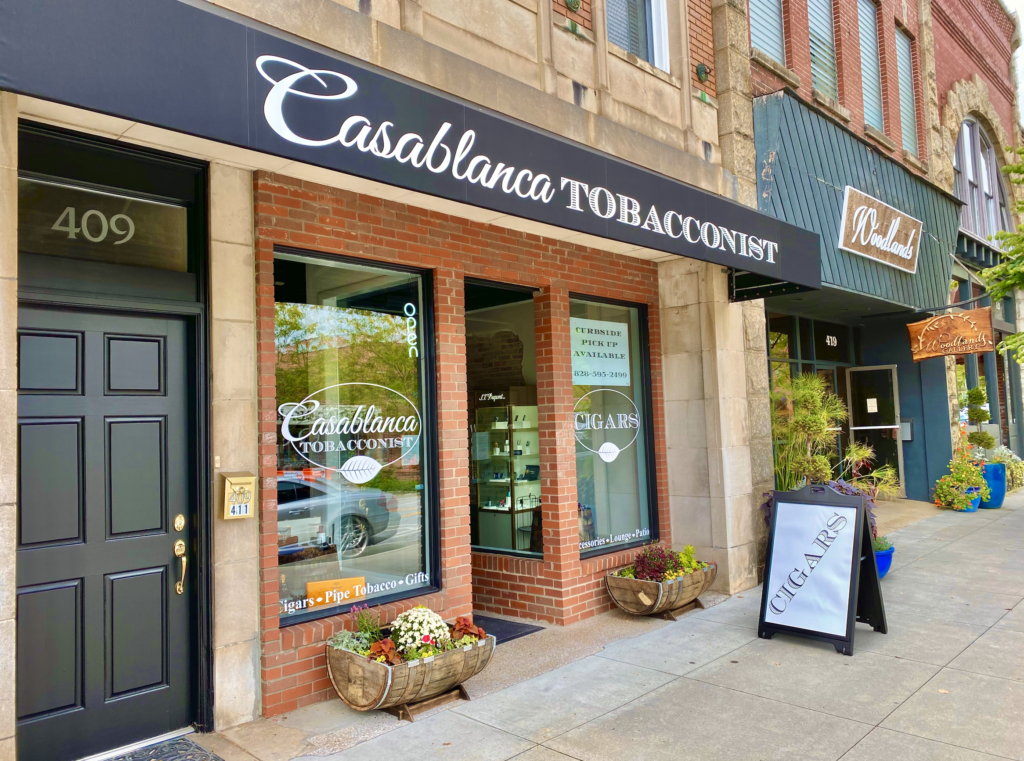
“America is still the land of opportunity,” said Souhail. “Don’t wait for the opportunities to come to you. Create your own opportunities. Create job for yourself. Don’t wait for people to hand things. Get up and do something … It is the American Dream and I’ve been lucky enough to live it.”
“This country is based on immigrants … it doesn’t matter who you are or where you’re coming from, you can make it.” His next dream is to support his wife. In addition to her running part of the business at the cigar lounges and tobacco shop, she has now completed culinary school to become a chef and plans to open a Moroccan restaurant in the Asheville area. Sam and Brooke are still young in their mid-30s and, while their path has been one of much sacrifice and hard work, it is a story that may just be beginning. After all, this is America.
You can listen to the full interview with Sam Souhail on Episode 86 of the Agents of Innovation podcast, on Apple podcasts, Amazon podcasts, and SoundCloud. You can also follow the podcast on Facebook, Instagram, or Twitter.
Please consider supporting the Agents of Innovation community by becoming a member of our Patreon page today, starting at just $5 a month!
]]>But perhaps it was a mistaken phone call he received in 2005 that started it all. Rivers was sitting at his desk when he received a call from someone was calling because they thought Rivers’ daughter was diagnosed with cancer. The caller had been mistaken. It wasn’t Rivers’ daughter, but another girl about the same age.
“But it moved me so much, that I remember telling Monica, my wife, ‘We have to find out who this family is and we have to find a way to help them.’”
Rivers reached out the family to try to find a way to help. He decided to host a barbecue for the young girl, Megan, at the family’s church. He told them to invite whoever they wanted, and he would be the pit master. And whoever wants to donate money could do it to help raise funds for her treatments.
450 people RSVP’d for it and Rivers only had ten days to prepare for the event. “That was the genesis of our barbeque ministry,” said Rivers.
At the time he received this call, Rivers was nearly twenty years deep into a successful career in the health care industry. During that time, while he traveled around the country for work, he had the opportunity to taste many different regional variations of barbecue. It helped inform the food that 4 Rivers customers would later encounter in his restaurants.
“When you look at our menu today, every item that is on there … comes from a different region of the country,” said Rivers. “That was strategically important to me. I didn’t want to be pinpointed just into one particular flavor profile.” The pulled-pork comes from Alabama, the chicken comes from Georgia, the ribs come from North Carolina, the brisket comes from Texas, Oklahoma, and Kansas City, and the Tri-Tip comes from California.
“Back in 2009, 2010, when we opened, no one in Florida really did brisket,” said Rivers. “No one really knew about it and how good it was – and that’s why it’s on the front line of our restaurant when you come in. I had to educate people about how good brisket was.”
John is married to a Texan and claims that about nine out of ten Texans who have eaten brisket at a 4 Rivers restaurant have thanked him for bringing Texas barbecue to Florida.
While still a busy executive in the health care industry, that first fundraiser he did for the young girl stricken with cancer opened his eyes that perhaps his passion for barbecue could be used for good. “That was the very first time that I took this passion,” said Rivers, “and I lined it up with my actions.”
“So many times, we think that happiness comes with money or titles – and it’s not. I know a lot of rich people who are very unhappy,” said Rivers. “Happiness comes when you are lining up your passion with your occupation and your actions and especially if you are doing it to help other people.” Reflecting on that first fundraiser for Megan, he said, “That was the first time I had ever done anything like that, and I became alive.”
Over the next four years, he continued his barbecue ministry for all sorts of fundraisers and causes. “During those four years something happened,” said Rivers. “I was one person Monday through Friday when I went to work, and I was a completely different person on Saturdays and Sundays when I was running the ministry.”
“The disparity between those two people became so great. I did something that shocked everybody. I retired,” he said. “Sometimes you have to take yourself out of the wrong position – literally – to allow yourself to see the opportunities that get you into the right position that you need to be in life.” Rivers retired as president of a $1.5 billion health care company.
“If you’re doing something you’re passionate about, first, bring passion into what you’re doing and if that still doesn’t satisfy you then go find something that is going to make you happy and bring passion into your life,” said Rivers. “Life’s too short. You ought to do something you really believe in.”
In the last year of doing the barbecue ministry from his garage, they served over 40,000 people. The first restaurant he opened in 2009 wasn’t supposed to be a restaurant. It was supposed to be a commissary that we could run the ministry out of, said Rivers. “God blessed us and here we are today with a bunch of restaurants.”
And blessed they are.
4 Rivers Smokehouse quickly became one of the fastest-growing restaurants in the Southeast. At their pre-COVID peak, there were 23 locations of 4 Rivers around Florida, with just shy of 1,000 employees. He also has a few other restaurants, The Coop, which was named Central Florida’s “Best Southern” restaurant by Orlando Magazine. He also started the 4 Rivers Cantina Barbacoa Food Truck, a Latin-infused cantina barbacoa at Disney Springs, which has garnered national recognition.
MSN named 4 Rivers as the #1 barbecue restaurant chain in the country and Nation’s Restaurant News recognized 4 Rivers as one of their top five breakout brands.
Restaurant Business has named John Rivers a “power 20 leaders” in the restaurant industry. The Orlando Business Journal has named him the philanthropist of the year in 2019. John is a graduate of Florida State University. Today he serves on the board of governors of FSU’s College of Business.
John lives in Winter Park with his wife Monica and two children, Jared and Cameron. He also serves on the boards of his church, numerous schools, and charity organizations, including one he established: the 4R Foundation.
Rivers said the “barbecue ministry” itself has nothing to do with religion. “My ministry is to give back to people, to help the community, be it from food, be it from education, be it from mentorship. People leaned into my life when I was down and out, and I know they changed the trajectory of my life. And to have the opportunity, when God has given you a platform to touch and affect so many people, it’s to be able to use that.”
“You can make an impact in people’s lives in the place you are today,” said Rivers. “Every person you meet, every single day, you have a chance to impact their life, just by the way you treat them.”
“Business is a relationship – it’s a relationship with the community that you’re serving. If you’re not willing to form a bond with them and understand what those needs are – and especially if you’re not willing to step in and help fill those needs – how can you expect the community to come and fill your needs of buying your product and supporting your business?” He adds, “It has to be sincere.”
Due to the impact of COVID-19 on the restaurant industry, 4 Rivers lost 50 percent of their business overnight, said Rivers. “There were weeks we were burning over a million dollars a week in cash. We had to pivot very, very quickly. This company, 4 Rivers, was built out of coming out of the trenches and beating all the odds … so there’s been a galvanization, a determination on this team, that we’re going to fight for everything.”
“This was a big test,” admitted Rivers. They were forced to make a lot of layoffs, “which was incredibly sad because we don’t call our employees ‘team,’ we call them family, but we had to do it in order to survive.” He did make a promise to every employee that once they built the business back, they would welcome people back on their team who wanted to rejoin.
During the COVID-19 pandemic, 4 Rivers has pivoted all over the place. They instituted virtual drive-thru windows, they started selling grocery items like that much-coveted toilet paper.
“We had all these assets, catering facilities, vans, trucks, and people – we were laying off people,” said Rivers. “But I said: we aren’t going to stop the ministry effort. This is now more important than ever.”
They reached out to their school partners at Orange County Public Schools (OCPS) and offered to fill the gaps of feeding kids in the community. “Gaps started popping up all over the place. We started feeding these kids and these families,” said Rivers.
John and his team sent emails out to other restaurant companies all over the state and let them know if they had any extra food, 4 Rivers had catering kitchens that were empty and could be used to feed those in need.
“It started coming in from all over the place.” He then learned about all the produce that was going bad on farms all over the place because no one was buying it. So, they started a vegetable and farm rescue program. “We took all this food in and turned it into meals.”
As of the time of our interview for Episode 85 of the Agents of Innovation, which took place in early October, 4 Rivers had already hired back over 400 people and served over 1.5 million meals to those in need and rescued over 500,000 pounds of produce that would have otherwise gone to waste.
“The people that we brought back – not only were they happy to just have a job again – but they went from frying fries in a smokehouse in a restaurant to building meals for people who needed food. And you talk about fulfillment – they were happy as could be.”
The 4R Foundation was established well before COVID19. It is focused on the core principles of supporting education, creating jobs, and feeding people.
The 4R Foundation works with OCPS and saw the horrible nutrition that students, especially those on free lunch, were eating in schools. John learned that one out of every five students live in food insecurity – meaning for many of those students, it’s the only meal they get all day. “So that meal is so important,” said Rivers.
While John works with great food bank charity organizations like Second Harvest, he repeated a line from a friend of his who runs that organization: “You can’t food bank your way out of hunger,” said Rivers. “Giving food away is not the answer. It’s a piece of it, but you have to go deeper. You have to educate kids and families about where does food come from and how do you create a healthy balance?”
The 4R Foundation helped two inner city schools in Orlando build gardens on campus, where students learn how to grow food, sell it to the school’s cafeteria, where it is served for them.
The 4R Foundation also set out to build a farm campus. The 4Roots Farm Campus resides today on John Young Parkway in Orlando. In partnership with Dr. Phillips Charities and the City of Orlando, they will be breaking ground on it in December and bringing in 40 students from all around the state and bringing in farmers from all over the country, to teach them about regenerative farming practices, to show them how to give back to the soil and how to increase their yields, and how to sequester carbon to stop the impact on climate change, and bring in health care workers and teach them about culinary medicine. They also want to build a national institute for culinary medicine.
“330 farmers in the U.S. lose their property every single week. The average produce we eat today has traveled 1,872 miles to get to your plate,” said Rivers. “So, think about the fossil imprint that you’ve made in bringing that product all the way over here. On top of that, think about all that nutrition you’ve lost because it’s been sitting in a truck, and think about all the farmers that are here that are losing their property that you could have been buying from.”
When you can’t make it to a 4 Rivers Smokehouse, you can find 4 Rivers barbecue products at grocery stores like Publix and Winn-Dixie. This was a strategic move, about two and a half years ago, to diversify their portfolio. In addition to the restaurants, they started a manufacturing and retail division. They ship some of the food they manufacture to other restaurants around the country as well as cruise lines and stadiums and convention centers.
With all the pivots he has made to keep his company afloat, as well as the strategic moves to diversify 4 Rivers, John Rivers seems to be a natural entrepreneur. His advice to those who want to become entrepreneurs: “If you start stepping out, you better be willing to put your heart into it. If it’s too easy, then it’s not worth doing.”
A couple of philosophies he offers: “Invest a little and learn a lot.” All those years of doing the barbecue ministry out of his garage was “testing, testing, testing,” he says. Through testing, one learns a lot about what customers want and what market is available. “You’re going to make mistakes, might as well make it on small investments and instead of a big one.”
During our conversation, Rivers reflected on his first real job when he was 16 years old. It was at a pizza place in Jacksonville called The Loop. He applied to be a cook. “Even back then, as a kid, I loved to cook,” he said. The manager gave him a job – but it wasn’t to be a cook. It was to wash dishes. “I was so young and naïve I turned to him and I said: I’m sorry sir, on the application, I think there’s been some sort of mistake, I filled out to be the cook.” The manager told him: you have to work for what you want. You don’t just get it. While he found a way to lift his spirits and work hard as a dishwasher, and even receive a promotion – to bussing tables – he never did quite find his way to be the cook at The Loop.
“The one thing I learned is that when you’re in a position you’re not enjoying is to become the best there’s ever been in that position and once you start to excel at it, people are going to notice, and you create the doors that open for you that give you the opportunity to move on.”
Those positions at The Loop taught him work ethic. He finished high school, paid his way through college, and worked twenty years in the health care industry, before finding his way back to his passion as a cook through the barbecue ministry. It eventually led to him to establishing 4 Rivers restaurants at the age of 42 years old – and later the 4R Foundation.
“The joke is that I had to open my own dang restaurant in order to be able to get in there and cook and do it,” said Rivers.
It may have taken him a few decades to get back into the kitchen and become the pit master. However, once John Rivers found a way to align his passion for cooking good barbecue with the actions built on the mission of his barbecue ministry, it allowed him and his team to not only feed people in his community, but teach them how to become their own cooks too.
You can listen to the full interview with John Rivers on Episode 85 of the Agents of Innovation podcast, on Apple podcasts, Amazon podcasts, Stitcher, and SoundCloud. You can also follow the podcast on Facebook, Instagram, or Twitter.
Please consider supporting the Agents of Innovation community by becoming a member of our Patreon page today, starting at just $5 a month!
]]>